Metro Safety Training Team
Certified Instructor & Editorial Team
Safety signage plays a crucial role in preventing accidents and ensuring the well-being of individuals across British Columbia workplaces. Whether in a Surrey construction zone, a Vancouver office, or a heavy industrial setting in Coquitlam, the right warning signage can be the critical difference between a routine day and a workplace disaster. Effective signs serve as the first line of defense, providing immediate visual cues that alert workers to hazards before they enter a danger zone.
This guide provides practical advice on how to design and implement effective safety signage, focusing on visibility, clarity, and compliance with WorkSafeBC regulations. Understanding these elements is essential for creating signs that not only meet legal standards in the Lower Mainland but also genuinely contribute to a safer environment.
As safety protocols continue to evolve, the importance of comprehensive certification, such as Basic First Aid (OFA 1) and Fall Protection Training, cannot be overstated. These courses arm individuals with the skills to respond to emergencies, while well-designed warning signage serves as a constant reminder of the hazards those skills are meant to mitigate.
The Importance of Clear and Visible Warning Signage
What is effective warning signage? Effective warning signage is a visual communication tool that uses high-contrast colors, bold fonts, and universal symbols to alert people to potential dangers and guide safe decision-making. To serve its purpose, warning signage must be recognizable instantly from a distance by every worker in Metro Vancouver.
The use of globally understood symbols—such as a skull for toxic substances or a lightning bolt for electrical hazards—is vital. These icons bypass language barriers, which is especially important in the diverse workforce of the Lower Mainland. Quick recognition is the goal; the message must be received before the hazard is reached.
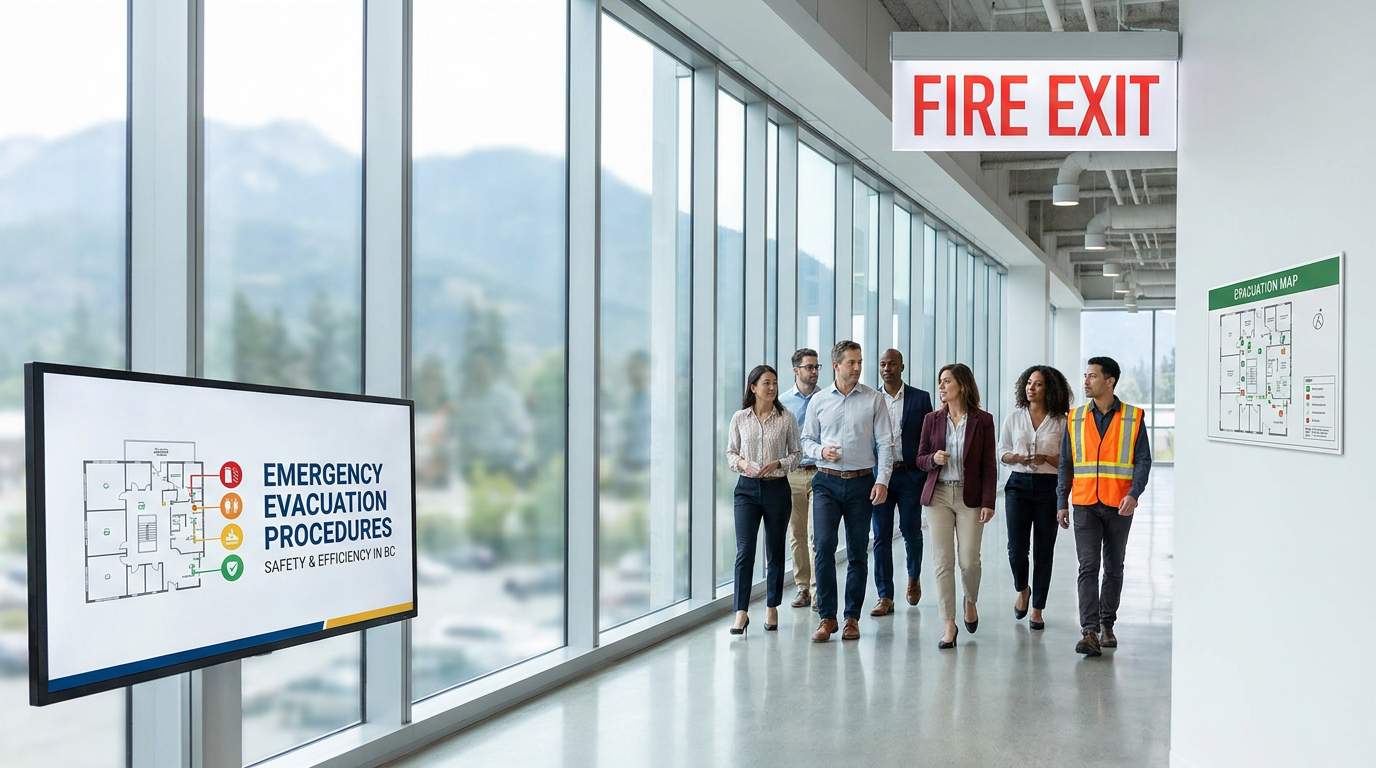
Visibility is critical in fast-changing environments like BC construction sites. Signs should be placed at eye level and in locations where they won't be obstructed. In areas with poor lighting, such as warehouses in Burnaby or New Westminster, reflective materials or illuminated signs are necessary. Using simple language and direct instructions, like "Wear Protective Gear" or "Danger: High Voltage," ensures the message is understood without confusion.
Regulatory Compliance and WorkSafeBC Standards
Compliance with safety regulations is non-negotiable for BC employers. While international standards like OSHA or ANSI provide a baseline, local businesses must adhere to WorkSafeBC first aid requirements and OHS guidelines regarding signage. These rules ensure that safety communication is standardized across the province, making signs recognizable regardless of the job site.
Understanding these regulations is crucial for anyone responsible for site management. Non-compliance can result in heavy fines, legal liabilities, and, most importantly, increased injury rates. In BC, specific requirements often cover:
- Sign size and weight specifications relative to the viewing distance of the hazard.
- Standardized color codes: Red for Danger, Yellow for Caution, and Green for First Aid/Emergency Info.
- The use of specific signal words to denote the severity of the risk (e.g., Danger, Warning, Caution).
Consistency is key. When your signage matches the standards taught in Standard First Aid + CPR/AED or Intermediate First Aid (OFA 2), workers can react faster because the visual language is familiar and consistent with their training.
Designing Signage for Specific BC Environments
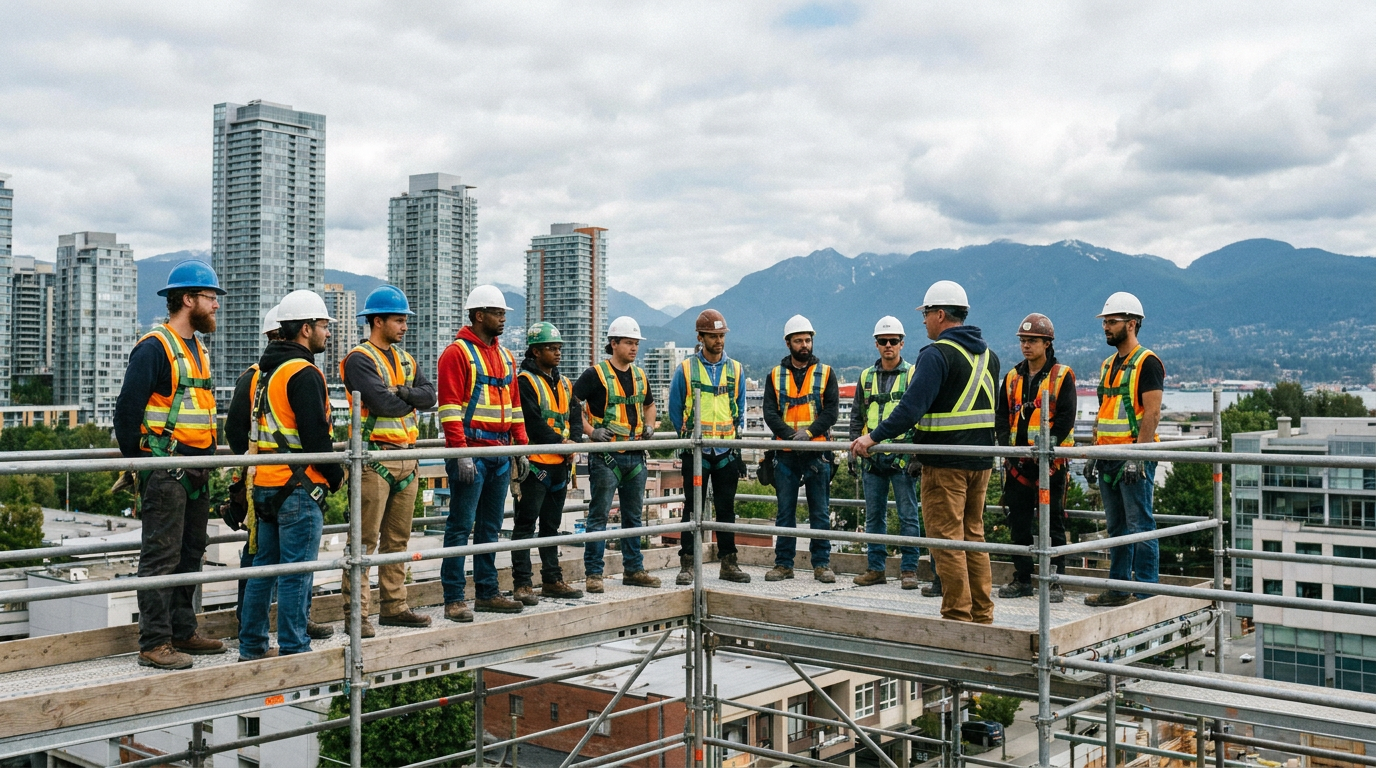
Different environments pose unique challenges for safety communication. A sign that works in a quiet North Vancouver community center may be invisible on a noisy industrial site in Coquitlam. You must tailor your signage to the specific risks of the location. For example, mastering forklift safety involves recognizing floor markings and overhead warnings that can withstand constant industrial traffic.
In industrial settings where heavy machinery is active, signs must be durable and resistant to wear, dust, and moisture. In environments where noise is a major factor, visual cues like large symbols and bright, contrasting colors become the primary method of communication to prevent workplace bone injuries or other serious accidents.
For specialized sites, such as those requiring Confined Space Safety training, signs must be highly specific about entry requirements and atmospheric hazards. By tailoring your design to the environment, you ensure the safety message isn't lost in the background noise of a busy Metro Vancouver workplace.
Maintaining and Updating Your Safety Infrastructure
Safety signage is not a "set it and forget it" task. Over time, signs in the Lower Mainland's varied climate can become faded, damaged by rain, or obscured by grime. Regular inspections should be part of your safety routine. If a sign is unreadable, it is as good as non-existent.
It is also vital to review sign content periodically. As regulations change—such as the 2024 WorkSafeBC OFA updates—your signage must reflect current terminology and protocols. If you introduce new equipment or change the layout of your facility, your signage must be updated immediately to guide workers safely through the new environment. Proper signage is also essential in directing workers to their emergency first aid kits during a crisis.
The Role of Training in Interpreting Signage
Signage is only effective if your team knows how to respond to it. This is why professional training is the backbone of workplace safety. Whether it is Advanced First Aid (OFA 3) or a basic orientation, training teaches workers the "why" behind the "what" on the sign.
For example, a sign indicating a chemical hazard is only useful if the worker knows the proper first aid for chemical spills. At Metro Safety Training, we reinforce the meaning of these visual cues in every course, ensuring that when a worker sees a "Danger" sign, they have the knowledge to take immediate, life-saving action.
Conclusion: Building a Culture of Safety in BC
Creating effective warning signage is a vital pillar of workplace safety in British Columbia. By prioritizing visibility, regulatory compliance, and environmental suitability, you build a workplace where hazards are clear and risks are minimized throughout the Lower Mainland. However, even the most visible sign cannot replace a well-trained team. Training and signage work together to create a true culture of safety that protects your most valuable asset: your employees.
Ready to upgrade your team's safety skills and ensure full compliance? Contact Metro Safety Training today to book your next certification course at our Coquitlam, Vancouver, or Surrey locations.
Frequently Asked Questions
Need Safety Training?
Metro Safety Training runs WorkSafeBC-recognized first aid, CPR and workplace safety courses in Coquitlam, Surrey and Burnaby, and on-site anywhere in Metro Vancouver.
coquitlam
surrey