Metro Safety Training Team
Certified Instructor & Editorial Team
Workplace emergencies can happen without warning. Whether it is a fire, earthquake, or chemical spill, a small incident can quickly turn into a disaster if your team is not prepared. In British Columbia, having practiced emergency evacuation procedures is not just a good idea—it is a legal requirement under WorkSafeBC regulations.
- Compliance: WorkSafeBC requires written evacuation procedures and at least one annual drill.
- Essential Elements: Plans must include clear alarms, two exit routes per area, and safe assembly points.
- Vital Roles: Assigning coordinators and First Aid Attendants ensures a controlled, organized response.
- Site-Specific Needs: You must assess local hazards, such as proximity to SkyTrain lines or difficult terrain.
- Preparedness: Regular training helps employees act quickly without hesitation or panic.
| Audience | BC Employers, Safety Managers, & Floor Wardens |
|---|---|
| Location | Coquitlam, Surrey, and Lower Mainland BC |
| Certification | WorkSafeBC OHS Compliance |
| Validity | Procedures should be reviewed annually |
| Prerequisites | None |
A well-designed plan provides a structured response. It explains how to report emergencies, who is in charge, which routes to take, and where to meet. For businesses in Coquitlam, Surrey, and the Lower Mainland, optimizing emergency response plans ensures people move away from danger safely and efficiently.
Ready to improve your workplace safety?
Register for Safety Training TodayTable of Contents
Why Emergency Evacuation Planning Matters for BC Workplaces
During an emergency, employees are often spread out. Some might be in meetings, while others could be operating forklifts in a warehouse. Without established procedures, workers may hesitate, which leads to dangerous delays.
A documented plan reduces uncertainty by providing:
- Reduced Exposure: Faster movement away from fire, smoke, and hazards.
- Clear Coordination: Defined roles for supervisors and First Aid Attendants.
- Better Accessibility: Pre-planned help for those with mobility challenges.
- Headcount Accuracy: A way to ensure every visitor and employee is safe.
WorkSafeBC Emergency Planning Requirements
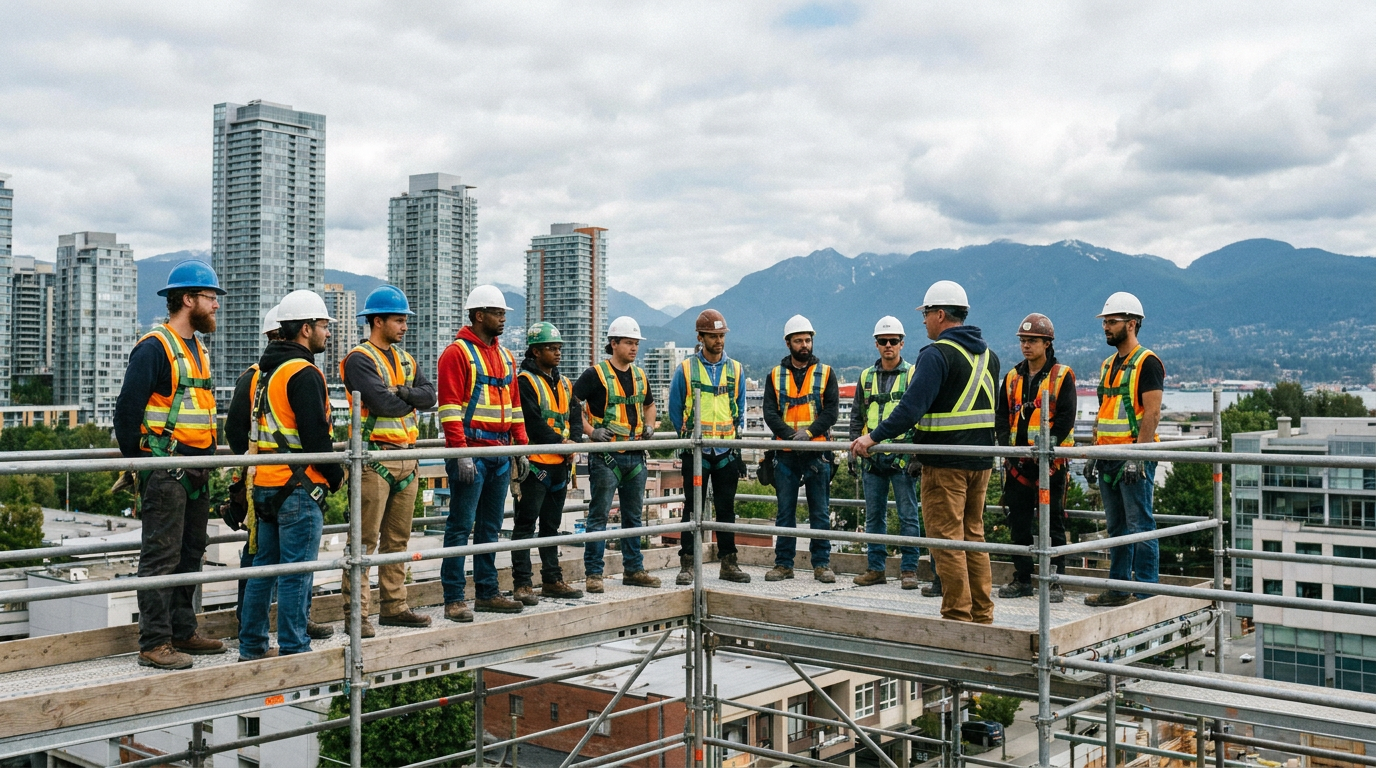
WorkSafeBC OHS Regulation sections 4.13 through 4.16 state that employers must create written procedures if a rescue or evacuation might be needed. This is critical for high-risk workplaces in BC, such as industrial or construction sites.
Compliance Checklist
- [ ] Conduct a thorough risk assessment of the workplace.
- [ ] Train all workers (including temporary staff) during their orientation.
- [ ] Perform evacuation drills at least once per year.
- [ ] Keep detailed records of all drills and training sessions.
- [ ] Appoint a designated coordinator to lead the emergency response.
Steps to Develop Effective Evacuation Procedures
1. Conduct a Site-Specific Risk Assessment
A generic plan is not enough. You must assess your specific Metro Vancouver location for hazards like electrical incidents or gas leaks. Consider nearby landmarks, such as SkyTrain lines, that might affect your evacuation routes.
2. Set Up Alarm and Communication Systems
Your alarm must reach everyone, even in loud areas. Use a mix of sirens, flashing lights, and digital alerts. Implementing technology in modern first aid and safety, like mass-notification apps, can speed up your response time.
3. Map Out Primary and Alternate Routes
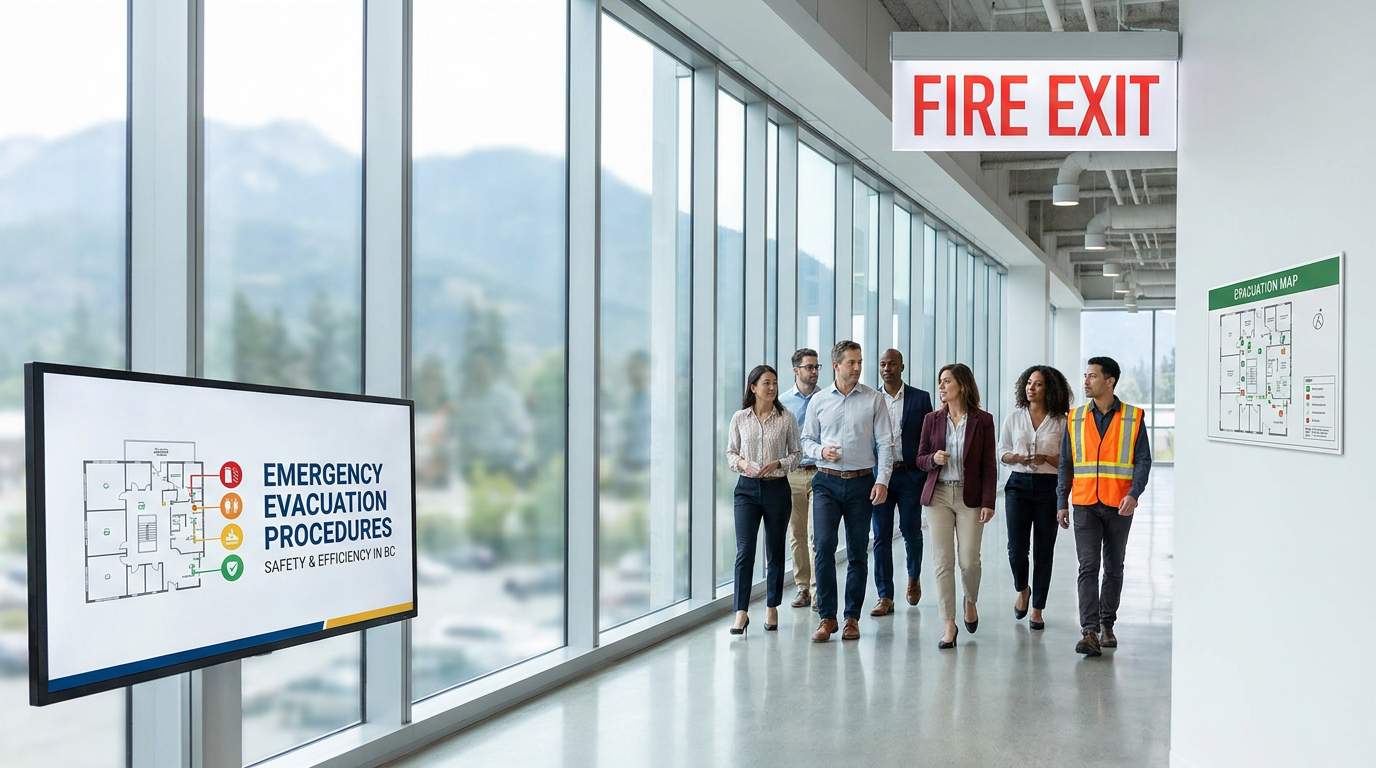
Every work area needs at least two ways out. Clearly mark these routes with effective safety signage. Ensure paths are well-lit and free of clutter. In tall buildings, remind workers to avoid elevators unless emergency officials say otherwise.
4. Choose Safe Assembly Areas
Your assembly point should be far enough away to avoid smoke or falling glass. In hilly areas like Coquitlam or Burnaby, make sure the ground is stable and level. Always keep assembly areas clear of emergency vehicle lanes.
Assigning Emergency Roles and Responsibilities
A plan only works if people know what to do. Assign these roles for every shift:
| Role | Primary Responsibility |
|---|---|
| Emergency Coordinator | Acts as the main contact for emergency services. |
| Floor Wardens | Checks rooms and directs people toward the exits. |
| First Aid Attendants | Staff with Standard First Aid certification who provide medical care. |
| Accountability Lead | Performs the final headcount using visitor logs and rosters. |
Conducting and Evaluating Evacuation Drills
Drills test if your plan actually works. When running a drill at your facility, look for crowded exits or confusion. After the drill, hold a meeting to find areas for improvement.
Ask these questions during your debrief:
- Did the OFA Level 2 attendant have their gear ready?
- Was the visitor log accurate and easy to access?
- Were there any bottlenecks at the exits?
Building a Culture of Preparedness
Strong emergency evacuation procedures are the foundation of workplace safety. By combining risk assessments with regular drills, BC employers can protect their teams. Whether you manage a small Vancouver office or a large Surrey warehouse, being prepared saves lives.
Metro Safety Training offers courses to support your team, from Fall Protection Training to WorkSafeBC-compliant first aid. We help ensure your team has the skills to respond when it matters most.
Expert Safety Training in the Lower Mainland
Visit our Coquitlam campus or Contact Us today at 604-521-4227 to book your next session.
Frequently Asked Questions
Need Safety Training?
Metro Safety Training runs WorkSafeBC-recognized first aid, CPR and workplace safety courses in Coquitlam, Surrey and Burnaby, and on-site anywhere in Metro Vancouver.
coquitlam
surrey
Upcoming Related Courses
Basic First Aid - October 22, 2026 -Coquitlam
October 22, 2026
6a1763b2-4c7b-4caa-81f1-c292cd1054d8
$98
Intermediate First Aid - October 22-23, 2026-Coquitlam
October 22, 2026
6a1763b2-4c7b-4caa-81f1-c292cd1054d8
$178
AFA- Oct 26- Nov 6, 2026
October 26, 2026
6a1763b2-4c7b-4caa-81f1-c292cd1054d8
$889
Basic First Aid- October 27,2026-Coquitlam
October 27, 2026
6a1763b2-4c7b-4caa-81f1-c292cd1054d8
$98
Intermediate First Aid-October 27-28, 2026-Coquitlam
October 27, 2026
6a1763b2-4c7b-4caa-81f1-c292cd1054d8
$178
Basic First Aid - Paladin - October 29, 2026
October 29, 2026
e213be70-5c29-4736-a5d9-dad3727d3d5e
$98