Metro Safety Training Team
Certified Instructor & Editorial Team
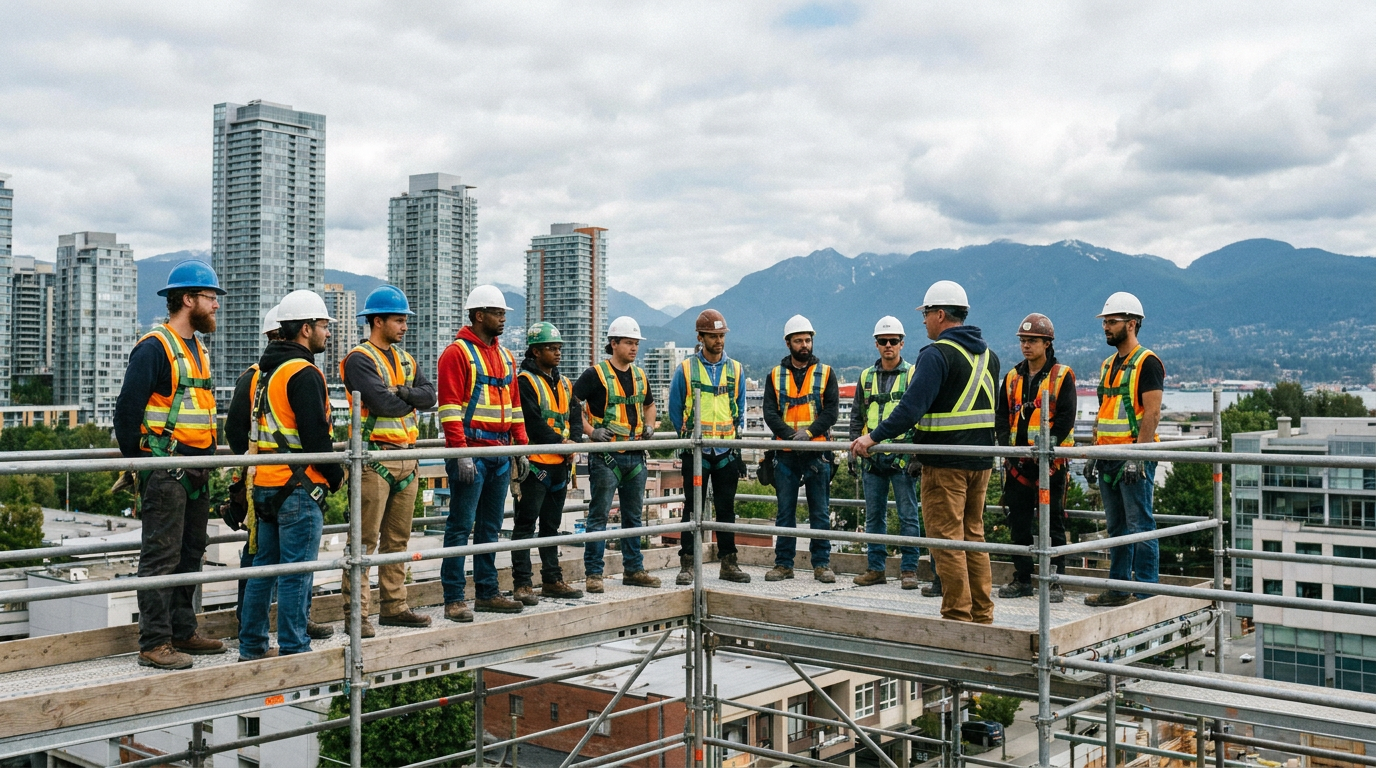
Scaffolds provide essential access to elevated work areas across British Columbia’s construction sector. From masonry and framing to high-rise window work in downtown Vancouver, these structures are vital for modern building projects. However, while they offer a stable platform when correctly managed, a single oversight in assembly or load control can lead to catastrophic accidents.
- Regulatory Compliance: Scaffolding safety is regulated under WorkSafeBC OHS Section 13.13.
- Mandatory Inspections: You must inspect all scaffolds before every shift and after major weather events.
- Fall Prevention: Guardrails and personal fall protection are mandatory for elevated platforms.
- Risk Mitigation: Training helps workers identify hazards like structural failure and electrical contact.
- Stability Rules: Never use scrap material for leveling; use screw jacks and proper bracing.
Ensure Your Crew is WorkSafeBC Compliant
Professional training prevents accidents and keeps your site running smoothly.
View Upcoming Safety Training DatesQuick Facts: BC Scaffolding Safety
- Audience: Construction workers, supervisors, and safety officers.
- Locations: Coquitlam, Surrey, Burnaby, and Vancouver (On-site available).
- Duration: Varies by module; contact for details.
- Price: Inquire for group or individual rates.
- Prerequisites: None (Fall Protection Training recommended).
- Validity: Industry standard is typically 3 years.
- Certification: WorkSafeBC Compliant Training Certificate.
- Registration: Call 604-521-4227 or register online.
Scaffolding safety training teaches workers and supervisors how to handle the hazards of elevated platforms. This includes fall prevention, structural stability, and electrical clearance. In the Lower Mainland, heavy rain and wind often impact site safety. Professional training ensures your crew can recognize risks before they become life-threatening.
Safe scaffold use requires more than just hardware. It demands rigorous planning, WorkSafeBC-compliant inspections, and a clear understanding of load limits. Whether you work on a residential site in Coquitlam or a commercial project in Surrey, you must adhere to high safety standards.
The Critical Importance of Scaffolding Safety
Scaffolds are temporary structures, which often leads to a false sense of security. In reality, they are high-risk environments. Provincial safety data shows that falls from heights are a leading cause of injury. Workers face five main risks:
- Structural Failure: Collapses caused by overloading or poor bracing.
- Environmental Hazards: Unstable platforms due to Vancouver’s wind, ice, or rain.
- Falling Objects: Tools or debris striking people below.
- Electrical Contact: Accidental contact with overhead power lines.
- Unsafe Access: Injuries from climbing frames instead of approved ladders.
What Qualifies as a Scaffold in BC?
WorkSafeBC defines a scaffold as any temporary elevated platform used to support workers, materials, or equipment. You must be familiar with several different systems:
- Supported Frame Scaffolds: The most common type for general construction.
- Mobile Scaffolds: Used for work that moves; these require locked casters.
- Suspended Scaffolds: Often used on high-rises for window cleaning or restoration.
- System Scaffolds: Complex structures designed for irregular building shapes.
Each system has unique anchoring and Fall Protection Training requirements.
WorkSafeBC Employer Responsibilities
Under WorkSafeBC OHS Regulation section 13.13, you are legally responsible for scaffold safety on your site. You cannot assume a rented scaffold or one built by a subcontractor is safe.
Employers in the Lower Mainland must ensure:
- Manufacturer instructions and engineering documents are available on-site.
- Only competent, trained personnel perform erection and dismantling.
- The base suits the ground conditions (e.g., using mudsills for soft soil).
- You provide Basic First Aid for your team.
- You use effective safety signage to warn other trades.
Mandatory Scaffold Inspections
WorkSafeBC Regulation section 13.3 requires a scaffold inspection before use on every shift. You must also reassess the structure after any modification or major weather event, like a West Coast windstorm.
Scaffold Inspection Checklist
- Is the foundation firm and level?
- Are all vertical members plumb (straight)?
- Are all braces and guardrails secure and fully installed?
- Is the scaffold clear of debris and ice?
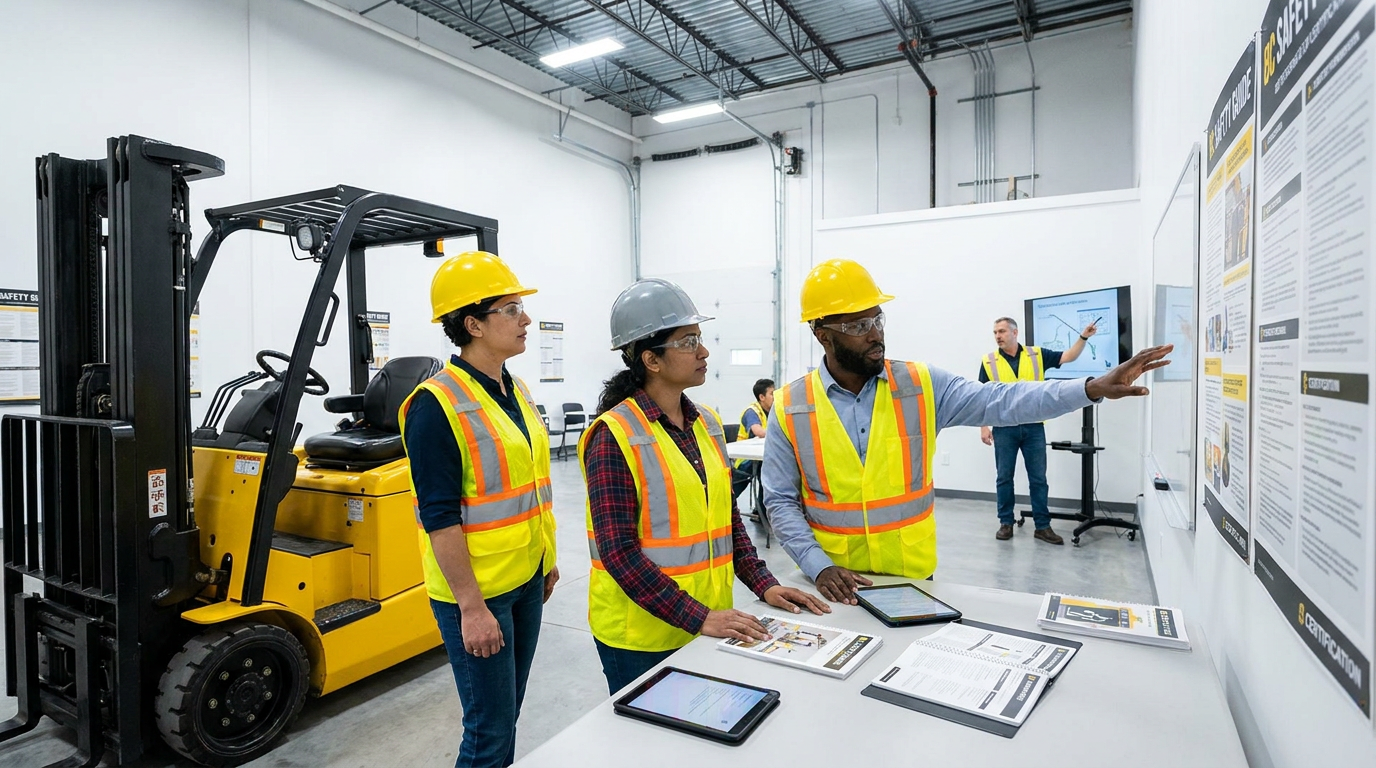
- Has the scaffold been struck by mobile equipment? (Ensure operators have forklift certification to prevent these impacts).
Scaffold Stability and Bracing
Stability begins at the base. Never use scrap lumber or loose bricks to level a scaffold. Use screw jacks according to the manufacturer’s specs. Typically, you should not extend them more than two-thirds of their length. If a scaffold is more than three times taller than its narrowest base dimension, you must secure it to the building structure.
Fall Protection and Falling-Object Control
Falls are the biggest risk on a scaffold. Guardrails are your primary defense, but some tasks require personal fall-arrest systems. You must train workers to fit harnesses and select anchors correctly.
For sites in high-traffic areas like Burnaby or New Westminster, you must also use toe boards and debris netting. These protect the public from falling objects. On complex sites, a Construction Safety Officer can help manage these risks and ensure construction site safety BC protocols are followed.
Safe Work Practices: Avoiding Common Mistakes
Many accidents happen when workers try to save time. Avoid these dangerous practices:
- Do not climb cross braces; use secured access ladders.
- Never place a ladder on top of a scaffold platform to reach higher.
- Do not move a rolling scaffold while workers are on it.
- Stay away from power lines unless you have a specialized safety plan.
If an injury occurs, having staff with Advanced First Aid is critical. High-altitude falls often lead to complex trauma or internal bleeding.
Conclusion
Scaffolding safety is a shared responsibility. It combines quality equipment with constant vigilance. By following WorkSafeBC regulations and ensuring your team is trained in hazard recognition, you create a safer workplace.
Book Your Safety Training Today
Metro Safety Training provides Fall Protection Training and CSTS Training throughout Coquitlam, Surrey, and Vancouver.
Contact our safety experts online or call 604-521-4227 to reserve your spot.
Disclaimer: This article provides general educational information. It does not replace manufacturer instructions or WorkSafeBC requirements. Always conduct site-specific hazard assessments.
Frequently Asked Questions
Need Safety Training?
Metro Safety Training runs WorkSafeBC-recognized first aid, CPR and workplace safety courses in Coquitlam, Surrey and Burnaby, and on-site anywhere in Metro Vancouver.
coquitlam
surrey
Upcoming Related Courses
Construction Safety Officer Part Time - October 20 - November 21, 2026
October 21, 2026
04b27be3-1ece-4fa2-945f-64910a538d56
$1600
Fall Protection October 24, 2026
October 24, 2026
$148
Confined Space October 24, 2026
October 24, 2026
6a1763b2-4c7b-4caa-81f1-c292cd1054d8
$158
Confined Space October 31, 2026
October 31, 2026
6a1763b2-4c7b-4caa-81f1-c292cd1054d8
$158
Fall Protection - November 5, 2026
November 5, 2026
6a1763b2-4c7b-4caa-81f1-c292cd1054d8
$148
Confined Space-November 5, 2026
November 5, 2026
6a1763b2-4c7b-4caa-81f1-c292cd1054d8
$158