Metro Safety Training Team
Certified Instructor & Editorial Team
Updated August 21, 2026
- WorkSafeBC Requirements: Your level depends on your hazard rating, staff count, and distance to a hospital.
- OFA Level 1 (Basic): A 1-day course for low-risk sites near emergency medical care.
- OFA Level 2 (Intermediate): A 3-day course for high-risk sites or larger workforces.
- Remote Sites: Level 2 is usually mandatory if your site is more than 20 minutes from a hospital.
- Compliance: Having the wrong level can result in WorkSafeBC audit penalties.
Quick Facts: BC Occupational First Aid
- Certification: WorkSafeBC Occupational First Aid (Basic/Intermediate)
- Duration: 1 Day (Level 1) vs. 3 Days (Level 2)
- Validity: 3 Years
- Prerequisites: Age 16+; Photo ID required
- Audience: BC workers, safety officers, and employers
- Price: Check current pricing here
- Locations: Coquitlam, Surrey, Burnaby, and Vancouver
- Registration: Online booking available
Choosing between OFA Level 1 and Level 2 comes down to one question: how much risk does your workplace carry? WorkSafeBC does not ask every employer to certify workers at the same level. Instead, the law sets requirements based on hazard ratings, headcount, and your distance from emergency medical care. This guide compares OFA Level 1 vs Level 2 BC in plain terms so you can book the right course without guessing.
Occupational First Aid Levels Explained
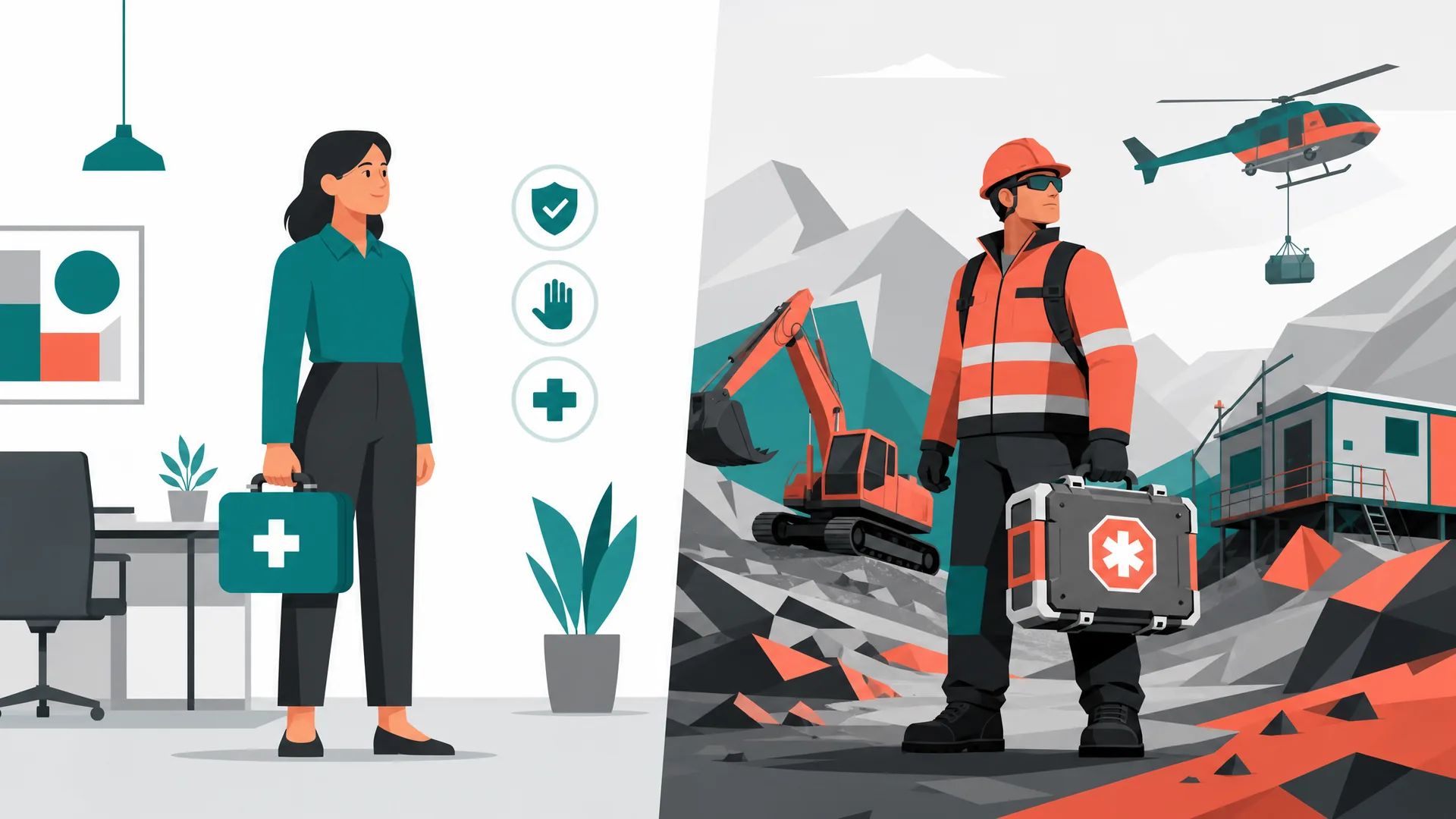
Occupational First Aid (OFA) is a tiered system for workplace training in British Columbia. It ensures your medical response matches your site's specific risks. These levels are not ranked by how hard they are, but by the depth of clinical care required.
New Terminology Updates
In late 2024, WorkSafeBC moved to new names: Basic, Intermediate, and Advanced. However, many pros still use the terms Level 1, 2, and 3. You should know both names to ensure you book the correct training.
Location and Risk Factors
WorkSafeBC sets these rules because a low-risk office in Vancouver faces different emergencies than a remote logging site. A "one-size-fits-all" approach would leave high-risk workers under-trained. Understanding WorkSafeBC first aid requirements is the best way to protect your team and stay compliant.
What is OFA Level 1 (Basic)?
Occupational First Aid Level 1 is the entry-level certification for BC workers. It focuses on life-saving skills like CPR, AED use, and airway management. This level works for workplaces where professional medical help is less than 20 minutes away.
What is OFA Level 2 (Intermediate)?
Occupational First Aid Level 2 is a more intensive 3-day program. It covers Level 1 skills plus advanced patient assessment and spinal injury management. This level is usually for larger crews or high-hazard sites where paramedics may take longer to arrive.
OFA Level 1 vs Level 2 BC: Course Comparison
For most Metro Vancouver professionals, your choice affects both your schedule and budget. Use the table below to see how these certifications stack up.
| Feature | OFA Level 1 (Basic) | OFA Level 2 (Intermediate) |
|---|---|---|
| Course Duration | 1 Day (8 Hours) | 3 Days |
| Primary Focus | Life support & minor wounds | Sustained care & serious trauma |
| WorkSafeBC Class | Basic First Aid | Intermediate First Aid |
| Ideal For | Retail, Office, Small Crews | Construction, Industrial, Warehousing |
If you need the fastest path to compliance for a low-hazard role, choose the Basic First Aid (OFA 1) course. However, if you operate forklifts or work at heights, your employer likely requires higher training to prevent the hazards of inadequate first aid provision.
WorkSafeBC Hazard Ratings: Which One Do You Need?
WorkSafeBC checks three things to determine your level: hazard rating (Low or High), worker count per shift, and "surface travel time" to the hospital. For a full breakdown, read how many first aid attendants a BC worksite needs.
Low-Risk Workplaces in Metro Vancouver
A low-hazard office in Burnaby or New Westminster typically only needs a Level 1 attendant. These sites have fewer serious injuries, and paramedics arrive quickly. For these teams, First Aid Level 1 training in Vancouver is the perfect balance of skill and speed.
Higher-Risk Sites in Surrey and Coquitlam
Industrial sites in Surrey or Coquitlam often have a "High" hazard rating. If you have more than a few workers on shift, you will likely need an attendant with Intermediate First Aid (OFA 2). This is critical for tasks requiring Fall Protection Training or heavy machinery use.
When Level 1 is Not Enough: OFA 2 Requirements
Many employers start with Level 1 training but fail WorkSafeBC audits later. You generally must upgrade to Level 2 (Intermediate) if:
- Your workforce is larger than the "Basic" coverage limits.
- Your site is remote (more than 20 minutes from a hospital).
- Your risk assessment identifies major trauma or internal bleeding risks.
- You work in specialized areas, like those requiring Confined Space Safety.
Which First Aid Level Do I Need? A Quick Decision Guide
Before booking at our Coquitlam or Surrey locations, ask yourself these four questions:
- Is my workplace "High Hazard"? (Example: Construction or manufacturing).
- Do I have more than 10 people on a shift? (Review WorkSafeBC Schedule 3-A).
- Am I more than 20 minutes from a hospital? (Travel time is a key factor).
- Are there specialized risks? (Example: High-voltage areas requiring electrical safety protocols).
If you answered "Yes" to any of these, you should take the Intermediate (Level 2) course to ensure you are fully compliant.
Frequently Asked Questions
Can I skip Level 1 and go straight to Level 2?
Yes. There is no prerequisite to take Level 1 before Level 2 in BC. However, Level 2 is more physically and academically demanding.
How long does the certificate last?
Both OFA Level 1 and Level 2 certifications are valid for three years from the date of issue.
What is the difference between Level 2 and Level 3?
Level 2 is for sites within 20 minutes of a hospital. Level 3 (Advanced) is required for remote sites where transport time to medical care exceeds 20 minutes.
Stay Compliant and Prepared in the Lower Mainland
Choosing between OFA Level 1 and Level 2 is about more than price. It is about having the right skills to save a life when every second counts. Whether you manage a small shop in Burnaby or a large industrial site in Surrey, Metro Safety Training provides the WorkSafeBC-approved courses you need.
Ready to secure your certification? View our Coquitlam training guide or contact us today to book your seat. Getting the level right the first time saves you money, reduces liability, and protects your team.
Frequently Asked Questions
Need Safety Training?
Metro Safety Training runs WorkSafeBC-recognized first aid, CPR and workplace safety courses in Coquitlam, Surrey and Burnaby, and on-site anywhere in Metro Vancouver.
coquitlam
surrey
Upcoming Related Courses
Intermediate First Aid - October 20-21, 2026 - Surrey
October 20, 2026
e213be70-5c29-4736-a5d9-dad3727d3d5e
$178
Intermediate First Aid - October 22-23, 2026-Coquitlam
October 22, 2026
6a1763b2-4c7b-4caa-81f1-c292cd1054d8
$178
Intermediate First Aid-October 27-28, 2026-Coquitlam
October 27, 2026
6a1763b2-4c7b-4caa-81f1-c292cd1054d8
$178
Intermediate First Aid-November 3-4, 2026-Coquitlam
November 3, 2026
6a1763b2-4c7b-4caa-81f1-c292cd1054d8
$178
Standard First Aid-November 4, 2026-Surrey
November 4, 2026
e213be70-5c29-4736-a5d9-dad3727d3d5e
$148
Emergency First Aid-November 4, 2026-Surrey
November 4, 2026
6a1763b2-4c7b-4caa-81f1-c292cd1054d8
$108