Metro Safety Training Team
Certified Instructor & Editorial Team
Updated July 21, 2026
Imagine your toddler going limp at the dinner table. Or perhaps your infant makes a strange sound and suddenly stops moving. Your heart rate spikes. You might hesitate for a fraction of a second.
That brief moment of doubt is exactly what CPR for parents aims to eliminate. When an emergency strikes at home in Coquitlam or anywhere in the Lower Mainland, your fast action is the most critical link in the chain of survival.
Quick Summary: TL;DR
- Understand the technique differences between infant (0-1 year) and child (1 year+) CPR.
- Learn the specific "Back Blow" and "Chest Thrust" cycle for infant choking.
- Follow the "Alone vs. With Help" protocol for calling emergency services.
- Locate hands-on Red Cross training centers in Coquitlam, Surrey, and Burnaby.
CPR for parents is not about becoming a doctor. It is about building the muscle memory to act without fear. Since 2008, families across Metro Vancouver have trusted Metro Safety Training to build these life-saving skills. This guide covers the differences between infant and child CPR, how to stop choking, and where to find Child Care First Aid training near you.
Protect your family. Register for Child Care First Aid & CPR training in Metro Vancouver. View Upcoming Dates
Why Pediatric CPR Skills Matter for Parents
Most cardiac and choking emergencies for young children happen at home. This means you, as a parent or caregiver, are usually the first responder. Brain injury risk rises significantly within minutes when oxygen is cut off.
Traffic in the Lower Mainland can delay ambulance response times. Because of this, your ability to perform Basic First Aid is your child's primary safety net. Early CPR before paramedics arrive significantly improves survival and long-term health.
The "3 Cs" of First Aid
For any emergency, remember the 3 Cs of first aid:
- Check: Ensure the scene is safe and check the child's responsiveness.
- Call: Dial 911 or tell someone else to call.
- Care: Provide CPR or first aid until help arrives.
Infant CPR vs. Child CPR: Key Differences
CPR is not the same for every age. While you should always aim for 100 to 120 compressions per minute, the depth and hand placement vary. Infant CPR applies to babies under one year old. Child CPR applies from age one until puberty.
| Feature | Infant (Under 1 Year) | Child (1 Year to Puberty) |
|---|---|---|
| Compression Depth | Approx. 4 cm (1.5 inches) | Approx. 5 cm (2 inches) |
| Technique | Two thumbs or heel of one hand | Heel of one or two hands |
| Placement | Center of chest, below nipple line | Center of chest |
If you work as a teacher or daycare provider in BC, you likely need Standard First Aid + CPR/AED. This certification ensures you are ready for any age group.
How to Respond to a Choking Emergency
Choking is a top cause of injury for children in BC. You must use the correct method for the child's age to avoid causing internal harm.
Infant Choking (Under 1 Year)
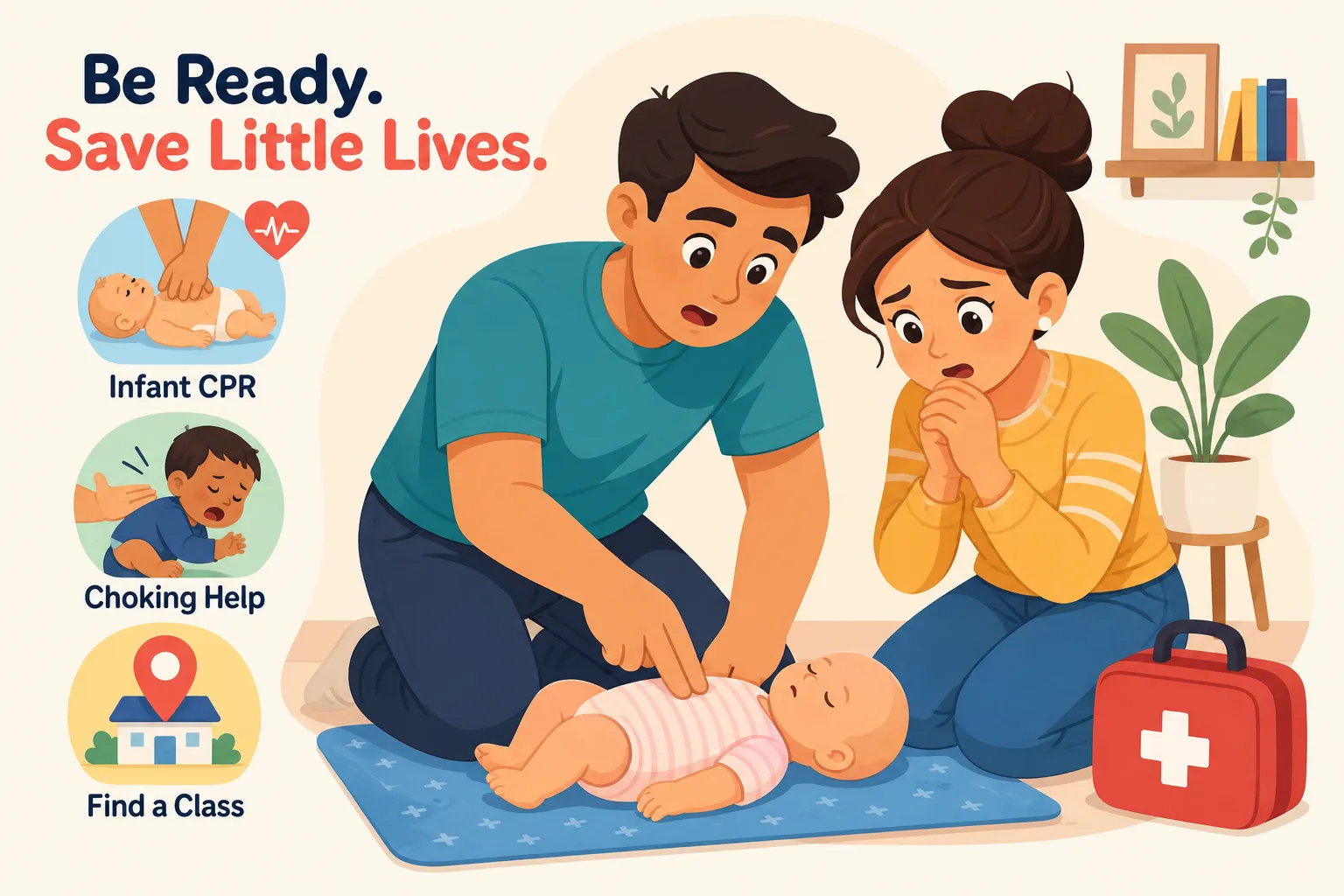
- Sit down and lay the baby face-down along your forearm.
- Support your arm with your thigh.
- Deliver five sharp back blows between the shoulder blades.
- If the object stays stuck, flip the infant face-up.
- Give five chest thrusts using two fingers.
- Repeat this cycle until the object comes out or the infant becomes unresponsive.
Child Choking (Over 1 Year)
For older children, use the Heimlich Maneuver. Lean the child forward and deliver five back blows. Then, perform five upward abdominal thrusts. Never use abdominal thrusts on infants, as their organs are still developing. For more tips, read about essential first aid for common childhood injuries.
When to Call 911 vs. Starting Compressions
If you find an unresponsive child in the Vancouver area, use this logic:
- If you are alone: Perform 2 minutes of CPR (about 5 cycles) before stopping to call 911.
- If someone is with you: Ask them to call 911 immediately and find an AED while you start CPR.
- Stay on the line: 911 dispatchers can help you keep the right compression rhythm until help arrives.
Find Accredited Training in Metro Vancouver
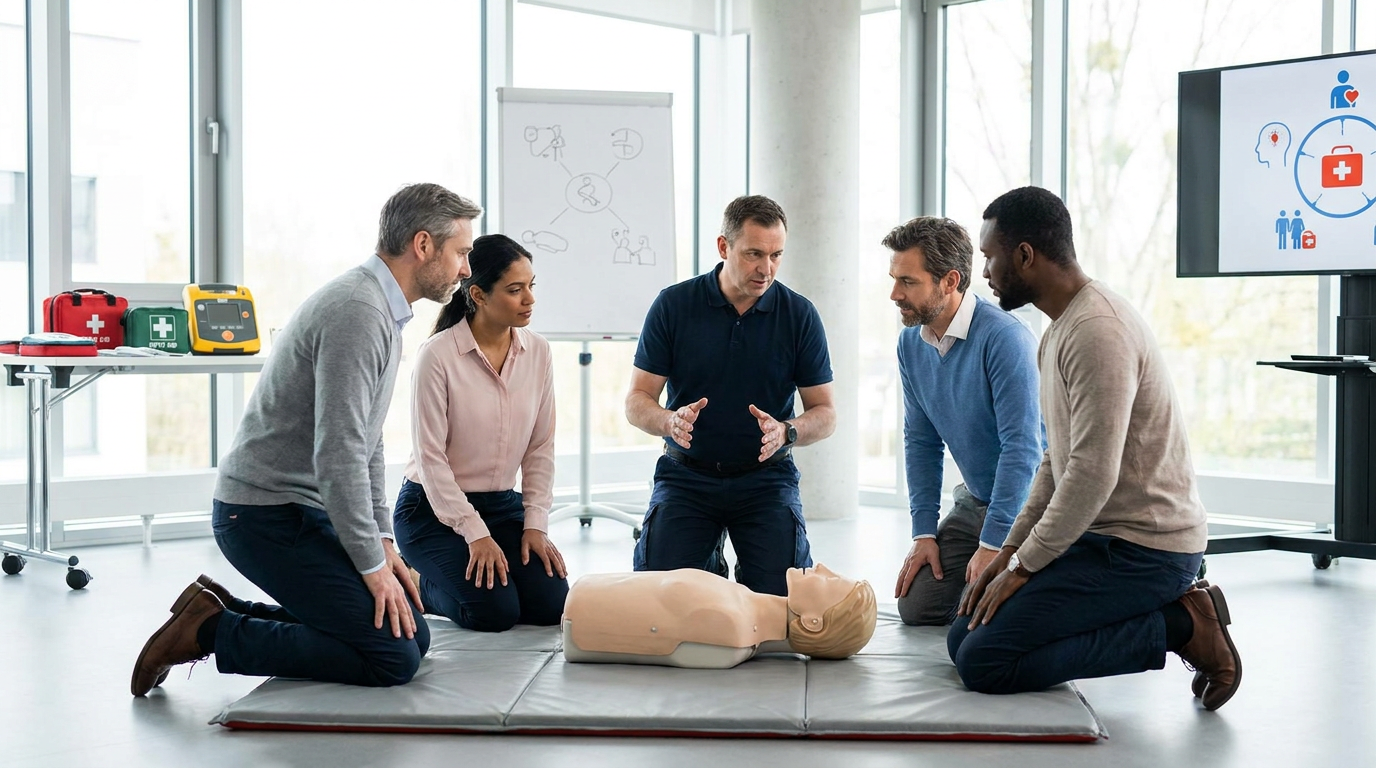
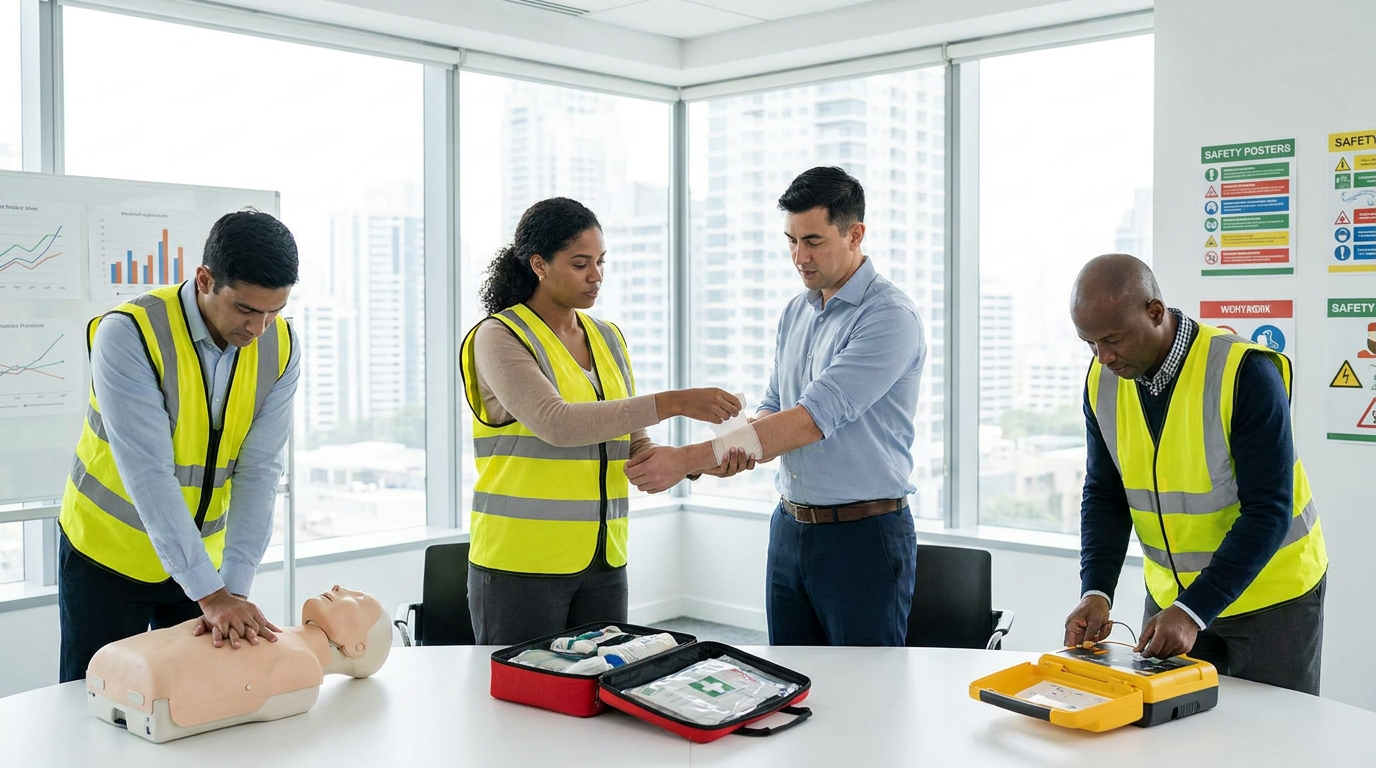
Reading a guide is helpful, but hands-on practice is essential. Using mannequins builds the confidence you need for a real emergency.
Quick Facts: Pediatric First Aid Training
- Certification: Canadian Red Cross Child Care or Level C CPR/AED.
- Valid For: 3 years.
- Locations: Coquitlam, Surrey, and Burnaby campuses.
- Audience: Parents, grandparents, and daycare providers.
- Duration: Varies by level (usually 8-16 hours).
- Registration: Available online through Metro Safety Training.
Our Canadian Red Cross Level C course covers adults, children, and infants. For BC parents, training is available at our Coquitlam campus, Surrey center, and Burnaby facility. To be fully prepared, combine your training with a complete home first aid kit.
Conclusion: The Safety You Build Today
Pediatric CPR is about persistence, not perfection. Any compressions are better than doing nothing. By learning these skills, you give your child a safety net that professional responders cannot provide in those first few critical minutes.
Is your certification about to expire? If it has been more than six months since you practiced, book a CPR recertification today. The training you invest in now is the life-saving response you will have ready when it matters most.
Don't wait for an emergency. Reserve Your Spot for a Pediatric First Aid course with Metro Safety Training today.
Frequently Asked Questions
Q: How often should parents practice CPR skills?
A: While certifications last three years, it is recommended to review your steps every six months to keep the knowledge fresh.
Q: Can I use an AED on an infant?
A: Yes, most modern AEDs have pediatric pads or a "child mode" that reduces the energy level for infants and children under 8 years old.
Q: What if I am afraid of hurting the child during CPR?
A: It is common to fear causing injury like a broken rib. However, the risk of not performing CPR is far greater. Focus on maintaining blood flow to the brain.
Frequently Asked Questions
Need Safety Training?
Metro Safety Training runs WorkSafeBC-recognized first aid, CPR and workplace safety courses in Coquitlam, Surrey and Burnaby, and on-site anywhere in Metro Vancouver.
coquitlam
surrey