Metro Safety Training Team
Certified Instructor & Editorial Team
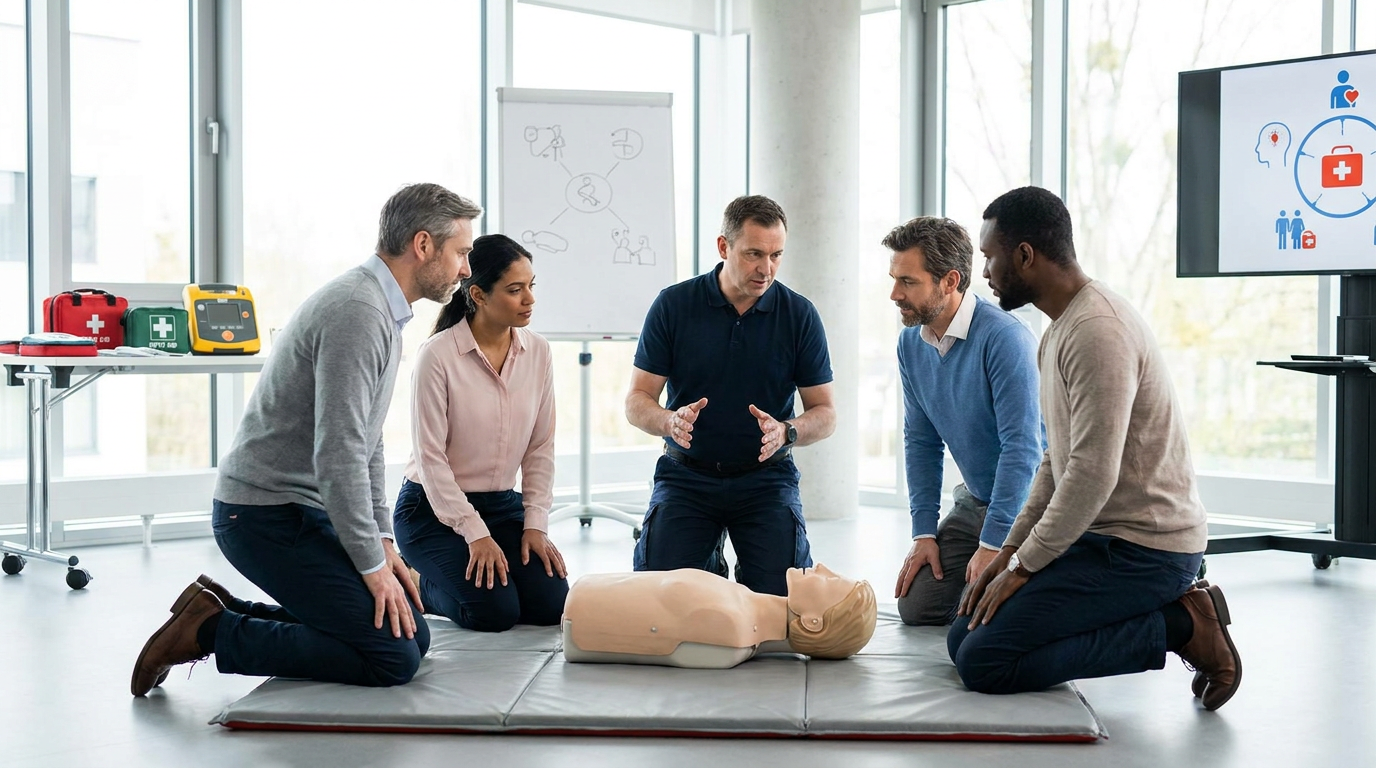
Occupational first aid training is about more than just workplace rules. The skills you learn in class work just as well at home or in public as they do on a job site. Whether you work in an industrial zone in Surrey, BC or a retail office in Vancouver, BC, a medical emergency can happen at any time. Proper training gives you a plan to assess danger, stay safe, and provide care until paramedics arrive.
In British Columbia, the new WorkSafeBC first aid guidelines have updated how we learn. Skills are now divided into Basic, Intermediate, and Advanced levels. While there is a lot to learn, three core lessons are the most important for saving lives across the Lower Mainland.
- Check-Call-Care: This sequence is the foundation for managing any emergency safely.
- Choking Response: Learn to help adults, infants, and pregnant individuals.
- Bleeding Control: Advanced levels (OFA 2 & 3) teach critical life-saving techniques like tourniquet use.
- 2024 Standards: Courses align with the latest WorkSafeBC Basic, Intermediate, and Advanced levels.
- Confidence: Certification helps you replace panic with a clear, professional plan.
Quick Facts: Occupational First Aid
- Duration: 1 to 10 days (depending on level)
- Certification: WorkSafeBC (Basic, Intermediate, or Advanced)
- Validity: 3 Years
- Location: Coquitlam & Metro Vancouver
- Prerequisites: Age 16+; Government ID required
- Audience: BC Workers, Managers, and Safety Officers
- Price: Varies by level (See schedule for details)
- Registration: Available online or by phone
Prepare for any emergency. Register for Occupational First Aid Training Today
Lesson 1: Mastering the Emergency Response Sequence (Check, Call, Care)
One of the most vital lessons in first aid training in Coquitlam is how to stay calm. Without training, people often get "tunnel vision." They might rush in and ignore dangers like live wires, chemicals, or moving machines.
Check the Scene and the Person
At our Metro Vancouver training centers, we teach that you cannot help others if you become a victim. You must scan for workplace hazards such as:
- Unstable structures or falling materials (common on Burnaby construction sites).
- Confined spaces with toxic air—a focus of Confined Space Safety training.
- Moving vehicles or heavy industrial equipment.
Once the scene is safe, check the person for responsiveness and breathing. If they are conscious, always ask for consent before you start. We cover this in detail in our Basic First Aid (OFA 1) course.
Call for Help and Provide Care
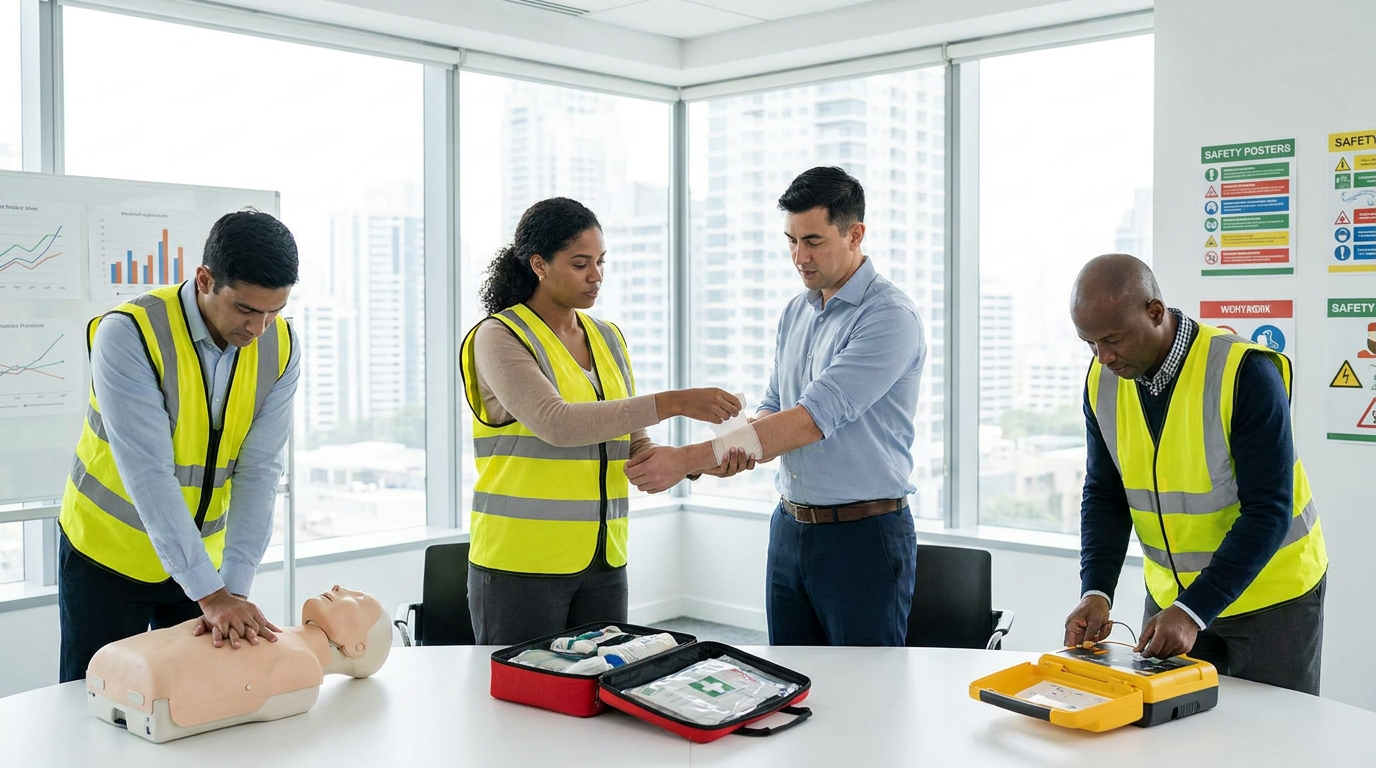
Good communication saves lives. In a noisy shop or warehouse, shouting "someone call 911" often fails. We teach you to point to one person: "You in the yellow vest, call 911 and come back to tell me when it’s done." This ensures help is on the way while you follow the 3 Cs of first aid.
Lesson 2: Rapid Response to Airway Obstructions (Choking)
Choking is a silent emergency. If a person cannot speak, cough, or breathe, brain damage can start in minutes. Training helps you spot the universal sign for choking and act fast.
For a responsive adult, the Canadian Red Cross Level C standards use back blows and abdominal thrusts. However, different victims need different care:
- Pregnant victims: Use chest thrusts instead of abdominal thrusts.
- Infants: Use a specific sequence of back blows and chest compressions (see our CPR for parents guide).
- Unresponsive victims: Start CPR immediately to try and clear the airway with chest compressions.
Lesson 3: Wound Management and Life-Threatening Bleeding
Managing physical trauma is a major part of occupational safety. In Intermediate First Aid (OFA 2) and Advanced First Aid (OFA 3), you learn to handle more than just small cuts.
Recognizing Critical Signs
You will learn to identify life-threatening bleeding where blood spurts or flows without stopping. In these cases, you must use tourniquets or wound packing. You will also learn how to spot internal bleeding, which is vital when a person looks fine on the outside but has serious injuries inside.
Infection Control
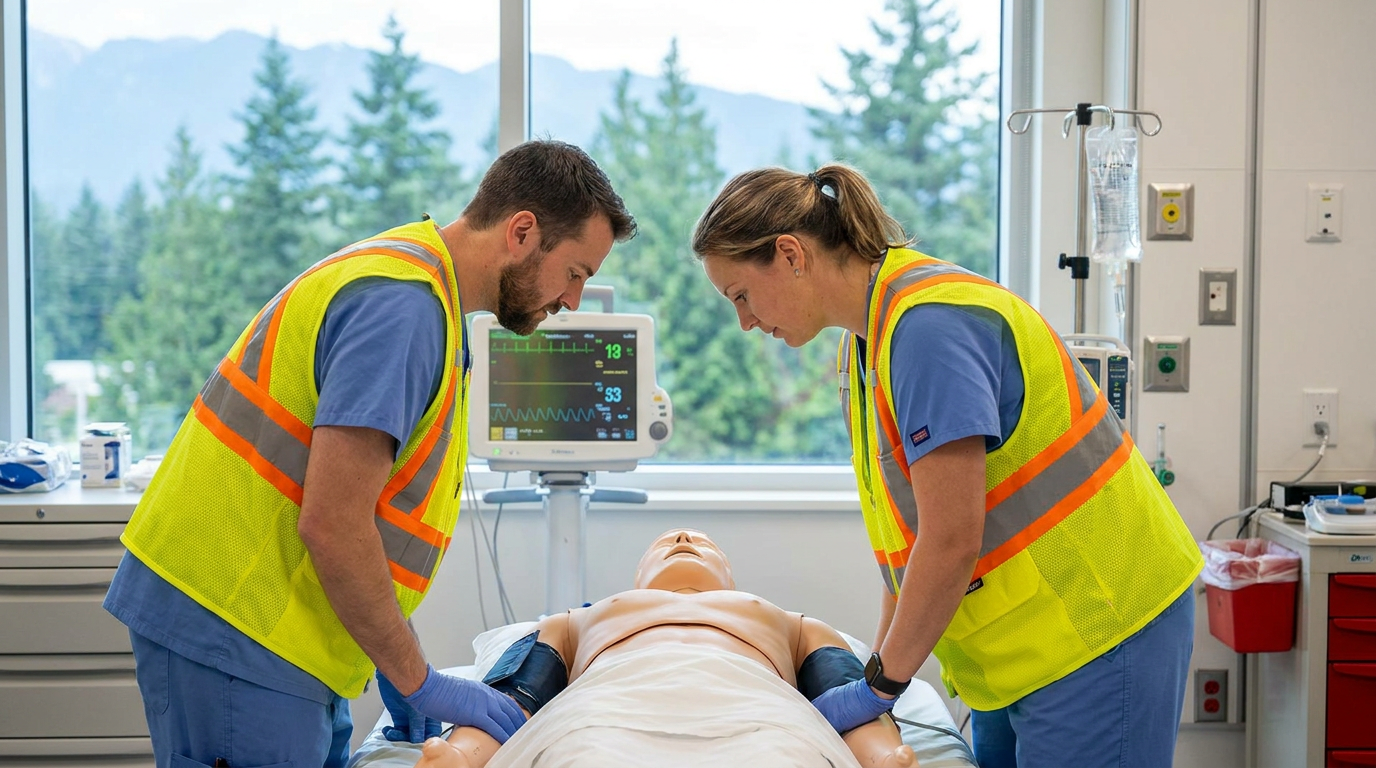
Safety goes both ways. We teach you how to use personal protective equipment (PPE) like nitrile gloves and pocket masks. This prevents the spread of diseases. It is also a WorkSafeBC requirement for all first aid attendants in the Lower Mainland.
Choosing the Right OFA Level in British Columbia
The course you need depends on your workplace risks and how close you are to a hospital. Here are the 2024 standards:
| Course Level | Best For... | Duration |
|---|---|---|
| Basic (OFA 1) | Low-risk jobs or small crews. Core life-saving skills. | 1 Day |
| Intermediate (OFA 2) | Construction or manufacturing near medical help. | 2 Days |
| Advanced (OFA 3) | Remote sites or high-hazard industries. Can lead to an AFA to EMR bridge course. | 10 Days |
Conclusion: Confidence Through Competence
The real value of Occupational First Aid Training is the confidence to act when seconds count. By practicing with experts, you replace panic with a plan. Whether you need a certificate for work or want to keep your family safe, Metro Safety Training provides the expert coaching you need.
Ensure your workplace is compliant and your team is prepared. View Upcoming Course Dates in Coquitlam
Check the latest WorkSafeBC requirements to see which level you need.
Frequently Asked Questions
Need Safety Training?
Metro Safety Training runs WorkSafeBC-recognized first aid, CPR and workplace safety courses in Coquitlam, Surrey and Burnaby, and on-site anywhere in Metro Vancouver.
coquitlam
surrey