Metro Safety Training Team
Certified Instructor & Editorial Team
Updated October 5, 2026
TL;DR: OFA Level 2 Essentials
- Intermediate Standard: Required for moderate-risk BC worksites.
- Location Rule: Mandatory for sites 20+ minutes from a hospital.
- Training: 70-hour intensive course covering trauma and spinal care.
- Validity: Valid for 3 years; you must recertify before the expiry date.
- Availability: Courses held in Coquitlam, Surrey, Burnaby, and Vancouver.
Quick Facts
| Certification | WorkSafeBC Intermediate First Aid (OFA Level 2) |
| Duration | 70 Hours (typically 2 weeks) |
| Validity | 3 Years |
| Locations | Coquitlam, Vancouver, Burnaby, and Surrey |
| Prerequisites | Min. 16 years old; physically able to perform first aid |
| Audience | Industrial workers, safety officers, and attendants |
| Price | Check booking portal for current rates |
Table of Contents
For employers managing moderate-risk worksites in BC, WorkSafeBC compliance is a top priority. Finding an available OFA Level 2 course in the Lower Mainland requires checking real-time schedules. This ensures your team remains certified and your site stays operational.
Metro Safety Training provides WorkSafeBC-certified Intermediate First Aid (OFA 2) training across several locations. We help you meet legal standards without unnecessary travel or downtime.
Occupational First Aid Level 2 is legally required for industrial environments. It is specifically needed where emergency response times may exceed standard urban benchmarks. Unlike entry-level courses, this training equips you to manage serious trauma and stabilize patients for longer periods.
Ensuring you have the right number of attendants is critical for safety. You can learn more by reviewing how many first aid attendants a BC worksite needs based on your hazard rating.
OFA Level 2 Course Schedule Across Metro Vancouver
We update training dates for 2026 and early 2027 regularly. These dates reflect seat availability and instructor assignments across the region. Seat capacity is strictly limited because practical assessments require a low student-to-instructor ratio.
We recommend checking our course calendar frequently to secure your spot. High demand in construction and manufacturing means dates often fill weeks in advance.
Sessions run year-round at these locations:
WorkSafeBC Requirements for Occupational First Aid Level 2
WorkSafeBC bases first aid requirements on hazard ratings, employee counts, and your distance from medical facilities. Under the 2024 WorkSafeBC first aid updates, Level 2 is the "Intermediate" standard.
You generally need this certification if your moderate-risk site is more than 20 minutes from a hospital. Employers must remember that OFA 2 is an industrial certification, not a recreational one. Failing to provide a qualified attendant can result in stop-work orders or heavy fines.
If your team works at heights, consider pairing this with Fall Protection Training. This provides comprehensive safety coverage for your site.
Curriculum and Skills Covered in OFA 2 Training
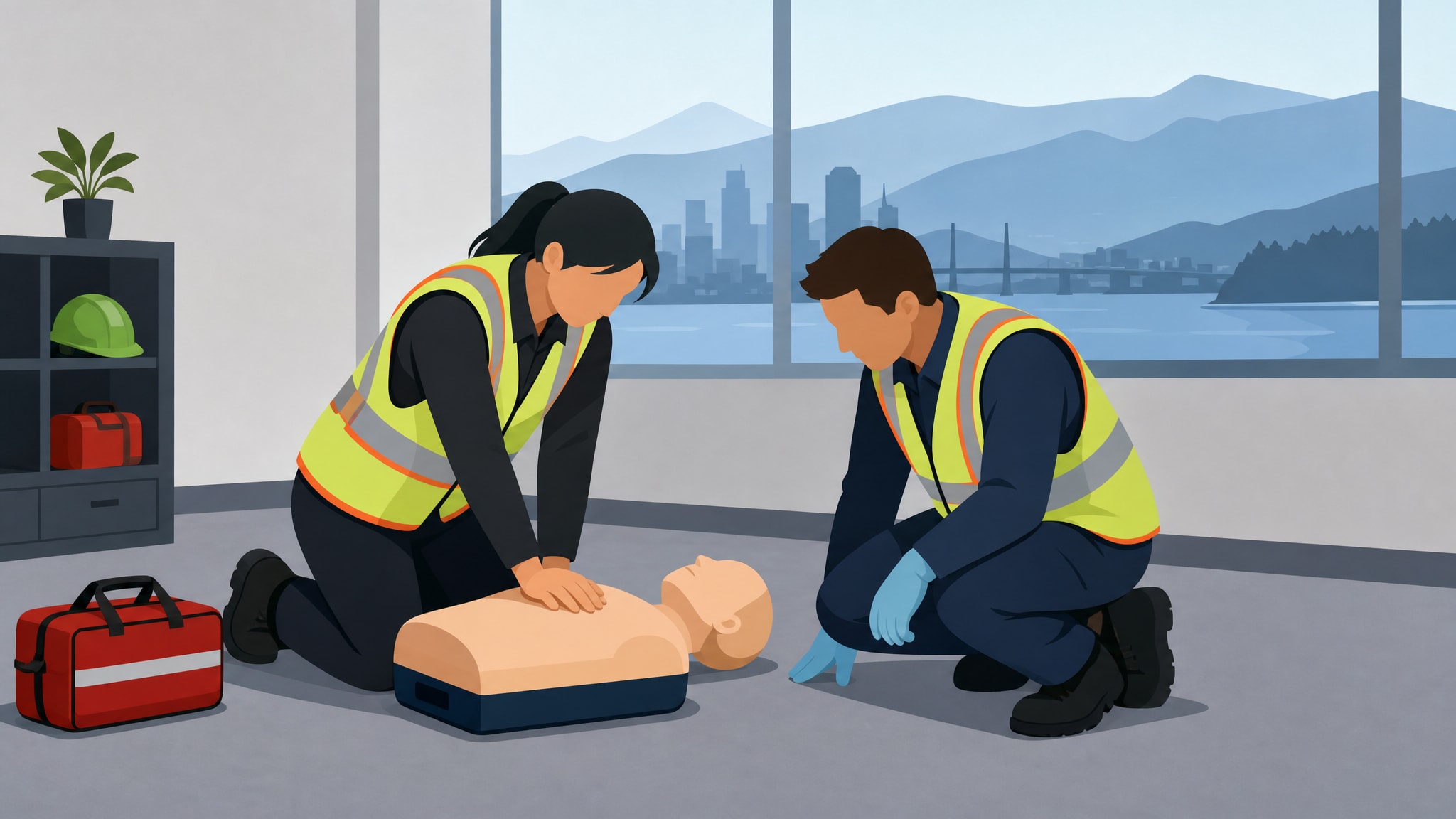
The OFA Level 2 program is an intensive 70-hour course. It moves beyond basic life support to cover advanced patient assessment. You will learn to conduct systematic head-to-toe exams to find critical issues.
Attendants learn to identify signs of internal bleeding, which is vital for industrial accidents. Key competencies include:
- Spinal Immobilization: How to apply cervical collars and spine boards correctly.
- Oxygen Therapy: Setting up equipment and managing flow rates for respiratory emergencies.
- Advanced Wound Care: Managing severe bleeding and major bone fractures.
- Documentation: Maintaining the first aid records and reports that WorkSafeBC mandates.
Graduates must pass both written and practical exams. This ensures you can perform life-saving interventions under pressure.
Certification Validity and Recertification Standards
An OFA Level 2 certificate is valid for three years. To stay compliant, you must complete a recertification course before your current ticket expires. If your certification lapses by even one day, WorkSafeBC requires you to retake the full 70-hour course.
Proactive planning is essential for safety officers. If you want to advance your career, OFA certification is a great starting point. It can lead to becoming an Emergency Medical Responder (EMR) or taking an AFA to EMR bridge course.
Training Locations and Booking
Metro Safety Training offers flexible booking for first aid training in Coquitlam and nearby cities. Our facilities use the latest medical gear to simulate real-world emergencies.
To register, follow these steps:
- Visit our online portal.
- Select your preferred location and date.
- Complete the registration form.
We offer group rates for companies certifying several staff members at once. For specific industrial needs, we also provide Confined Space Safety training to complement your first aid skills.
Frequently Asked Questions
Is OFA Level 2 hard?
It is an intensive 70-hour course that requires study and physical practice. However, our instructors guide you through every skill to ensure you are prepared for the exams.
What happens if my certificate expires?
WorkSafeBC regulations state you must retake the full course if your certificate expires. There is no grace period for recertification.
Can I use OFA Level 2 for basic first aid requirements?
Yes, OFA Level 2 (Intermediate) exceeds the requirements for Level 1 (Basic) sites. It is a higher-level certification.
Conclusion
Staying compliant with WorkSafeBC regulations keeps your workers safe. It also helps you avoid penalties. The OFA Level 2 certification gives you the skills to handle complex medical emergencies in industrial settings.
Secure your team’s safety today. Book your next course with Metro Safety Training across the Lower Mainland.
Find our latest safety training updates on Google
Add Metro Safety Training as a Preferred Source to see more of our guides and updates in Google Search.
★ See Metro Safety Training on GoogleFrequently Asked Questions
Need Safety Training?
Metro Safety Training runs WorkSafeBC-recognized first aid, CPR and workplace safety courses in Coquitlam, Surrey and Burnaby, and on-site anywhere in Metro Vancouver.
coquitlam
surrey
Upcoming Related Courses
Standard First Aid-November 4, 2026-Surrey
November 4, 2026
e213be70-5c29-4736-a5d9-dad3727d3d5e
$148
Emergency First Aid-November 4, 2026-Surrey
November 4, 2026
6a1763b2-4c7b-4caa-81f1-c292cd1054d8
$108
Emergency First Aid-November 14,2026-Coquitlam
November 14, 2026
6a1763b2-4c7b-4caa-81f1-c292cd1054d8
$108
Standard First Aid-November 14, 2026-Coquitlam
November 14, 2026
6a1763b2-4c7b-4caa-81f1-c292cd1054d8
$148
Standard First Aid - November 18, 2026
November 18, 2026
6a1763b2-4c7b-4caa-81f1-c292cd1054d8
$148
Emergency Fist Aid - November 18, 2026
November 18, 2026
$108