Metro Safety Training Team
Certified Instructor & Editorial Team
Updated July 16, 2026
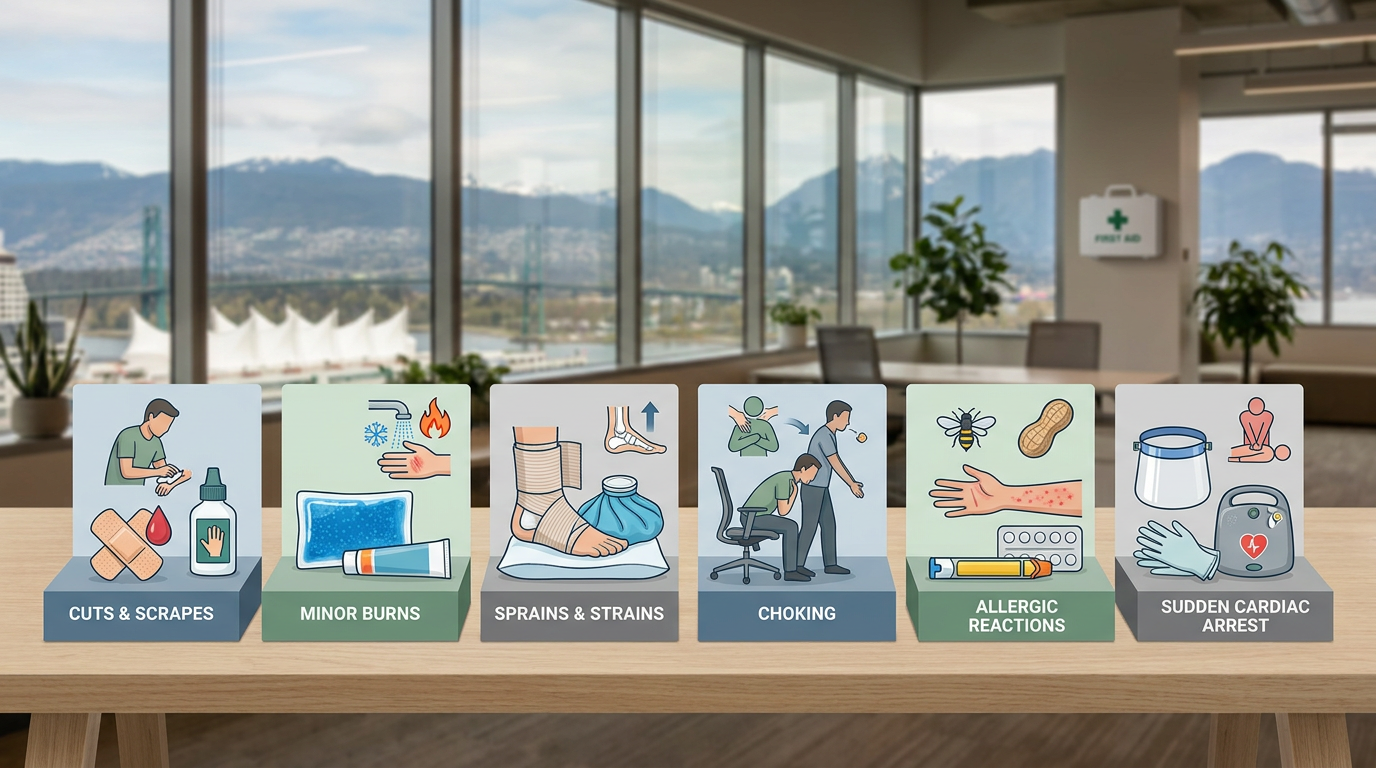
Accidents and emergencies don't wait for a convenient time; they can happen anywhere—at home, on a busy jobsite in Surrey, or while commuting through Vancouver. When an injury occurs, the first few minutes are critical. Knowing how to respond effectively before professional medical help arrives can significantly minimize the severity of an injury and improve recovery outcomes.
At Metro Safety Training, we believe that everyone in the Lower Mainland should be equipped with the confidence to act. Whether you are a parent or a professional seeking Basic First Aid (OFA 1), these fast tips provide a foundational guide for managing six common accidents safely and effectively, ensuring you meet the high standards expected by WorkSafeBC.
1. Responding to Burns and Scalds
Burns are frequent injuries in both domestic kitchens and industrial workplaces across Metro Vancouver. Immediate cooling is the most effective way to stop the burning process and relieve pain.
To treat a burn: Cool the affected area under cool (not cold) running water for at least 10 to 20 minutes. Avoid using "home remedies" like butter, toothpaste, or ice, which can damage skin tissue further. Once cooled, cover the area loosely with a sterile, non-adhesive bandage from a specialized home first aid kit to protect against infection.
2. Controlling Heavy Bleeding and Wounds
Bleeding can often look more serious than it is, but prompt intervention is necessary. Proper wound care is a core component of construction site first aid training, where tool-related injuries are more frequent in the BC trades industry.
- Apply firm, direct pressure to the wound with a clean cloth or sterile gauze.
- If possible, elevate the injured limb above the level of the heart to slow blood flow.
- If the dressing becomes soaked, do not remove it; simply add more gauze on top to maintain pressure.
3. Using R.I.C.E. for Sprains and Strains
Soft tissue injuries like sprains and strains are common for workers and athletes in Burnaby and New Westminster. The standard treatment follows the R.I.C.E. acronym:
- Rest: Avoid putting weight on the injured area.
- Ice: Apply a cold pack for 20 minutes every few hours (never apply ice directly to the skin).
- Compression: Wrap the injury with an elastic bandage to reduce swelling.
- Elevation: Keep the limb raised above the heart.
4. How to Assist a Choking Adult
If someone is choking and cannot speak, cough, or breathe, you must act quickly using abdominal thrusts (the Heimlich maneuver). This is a life-saving skill taught in our Emergency First Aid & CPR/AED courses.
To perform abdominal thrusts: Stand behind the person, wrap your arms around their waist, and make a fist just above the navel. Grasp your fist with your other hand and perform quick, upward and inward thrusts until the object is forced out or the person becomes unconscious.
5. Stopping Nosebleeds Correctly
A common mistake for residents is tilting the head back during a nosebleed. This causes blood to run down the throat, which can lead to gagging. Instead, lean the person slightly forward and pinch the soft part of the nose firmly for 10 to 15 minutes without letting go. If bleeding continues for more than 20 minutes, seek medical attention at a clinic in Coquitlam or your nearest Lower Mainland emergency room.
6. Managing Severe Allergic Reactions (Anaphylaxis)
Anaphylaxis is a life-threatening emergency characterized by swelling of the face, difficulty breathing, or a rapid pulse. Under WorkSafeBC first aid requirements, having staff trained to recognize these symptoms is vital for workplace safety.
- Call 911 immediately.
- If the person has an epinephrine auto-injector (EpiPen), assist them in using it.
- Keep the person calm and monitor their breathing while waiting for paramedics.
Professional Training in Metro Vancouver
Quick thinking saves lives, but formal training builds the muscle memory needed to act under pressure. Whether you are looking for an Intermediate First Aid (OFA 2) certification for work or a Standard First Aid + CPR/AED course for personal preparedness, Metro Safety Training offers expert instruction. Visit our primary Coquitlam campus or our training centres in Vancouver and Surrey to get certified today.
Frequently Asked Questions
Need Safety Training?
Metro Safety Training runs WorkSafeBC-recognized first aid, CPR and workplace safety courses in Coquitlam, Surrey and Burnaby, and on-site anywhere in Metro Vancouver.
coquitlam
surrey