Metro Safety Training Team
Certified Instructor & Editorial Team
Updated November 9, 2026
Most first aid content in BC covers the attendant, the person who responds to injuries at work. A smaller group of people teaches those attendants and assesses them. This article explains how WorkSafeBC first aid instructor certification in BC works, which credentials come first, and what instructors are expected to do once they qualify.
It is written for employers weighing an in-house trainer, safety officers planning succession, and individuals who want to teach.
What a WorkSafeBC First Aid Instructor Does
An attendant provides first aid at a workplace and responds to injuries when they happen. An instructor teaches occupational first aid courses and assesses learners against WorkSafeBC standards.
The two jobs overlap in knowledge but not in responsibility, and the rest of this article depends on that difference.
First Aid Trainer Requirements in BC
WorkSafeBC publishes the rules for occupational first aid training in its First Aid Program Standards, including the administration requirements for training providers. Those documents change between editions, so candidates should read the version in force in 2026 rather than rely on older summaries.
Requirements for instructors generally fall into three groups: the attendant credential, any experience conditions, and any conditions tied to the training provider. This article does not list hour counts or years of experience, because those figures belong to the current standards and the provider's own intake criteria.
Holding the Right Attendant Certificate
Candidates generally need a current WorkSafeBC attendant certificate at or above the level they plan to teach. Someone who wants to teach Level 1 content needs a different starting point from someone who wants to teach Level 3 content.
Two guides help readers place themselves. The overview of WorkSafeBC attendant level requirements by workplace shows which level each type of site needs. The comparison of Occupational First Aid Level 1 versus Standard First Aid clarifies the entry-level certificates, which is where most future instructors begin.
An expired attendant certificate is a problem. Because instructor status rests on the attendant credential, a lapse at the base can affect everything built on it.
WorkSafeBC First Aid Instructor Certification: The Pathway Step by Step
The route is the same in outline for most candidates, though each provider sets its own schedule and format.
- Confirm that the attendant certificate is current and at the right level.
- Choose the level to teach and find an instructor course run by a WorkSafeBC-authorized provider.
- Register and complete the theory, skills and teaching components.
- Pass the assessment.
- Ask the provider how the instructor qualification is recorded and who holds the record.
Cost and time vary by provider and by level. A course covering a higher level of content generally asks more of the candidate than one for entry-level content, and the provider's published outline is the only reliable guide to price and length.
First Aid Instructor Training: Registering for an Authorized Course
First aid instructor training in BC is normally delivered by an organization that WorkSafeBC has authorized to deliver training. Authorization is the point to verify before paying, because a course from an unrecognized source may not lead to a qualification that WorkSafeBC accepts.
Candidates can check this directly with the provider and with WorkSafeBC. The guide on how to choose a first aid training provider in BC lists the questions worth asking, and the same questions apply to instructor courses.
The provider's course outline sets the exact format. It should say which components are classroom-based, which are practical, and how the teaching portion is run. Candidates should also ask which attendant levels the course qualifies them to teach, and whether the provider requires instructors to remain affiliated with it afterwards.
Assessment: Demonstrating Teaching Skill and Knowledge
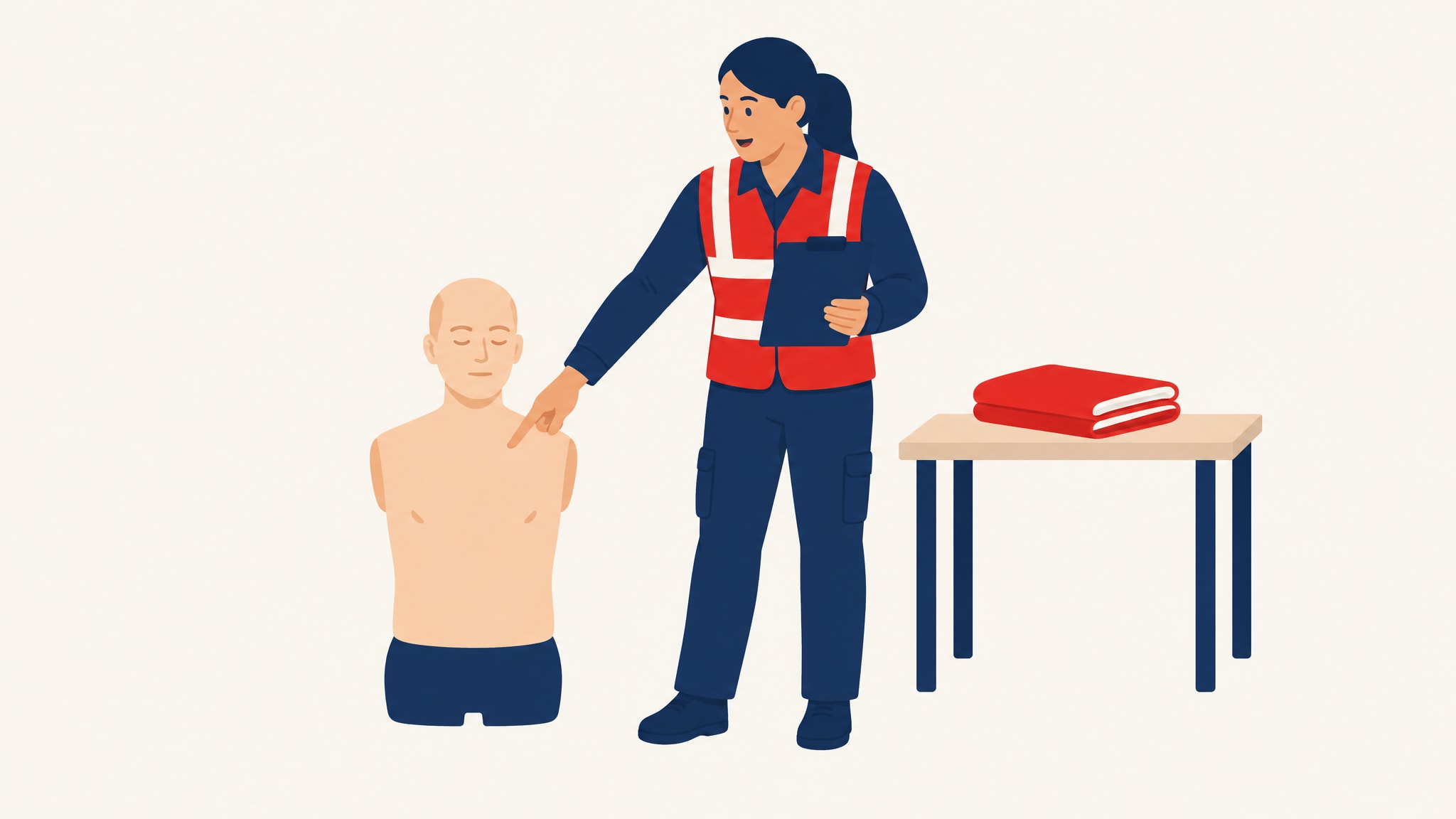
Instructor courses combine three things: theory, skills teaching and assessment. Candidates are tested on their own first aid knowledge, but they are also judged on how well they teach it.
In practice, that means candidates are observed running part of a session, demonstrating a skill correctly, and giving feedback to a learner. Strong first aid skills do not guarantee strong teaching, and the assessment is designed to separate the two.
Once the course ends, the provider confirms the result. A candidate who passes should ask in writing how the qualification is recorded, what documentation will be issued, and what the provider expects before the instructor can teach independently.
Certification Bodies: WorkSafeBC Authorization and the Canadian Red Cross
Two organizations dominate first aid instruction in BC, and they do different jobs. WorkSafeBC sets and supervises occupational first aid training. The Canadian Red Cross runs its own programs and certifies its own instructors.
WorkSafeBC-Approved Instructors and Training Providers
WorkSafeBC sets the occupational first aid standards, supervises training for attendants and instructors, and recognizes the organizations that deliver training and examinations. The phrase "WorkSafeBC-approved instructors" therefore describes people who teach within a recognized provider's program, not freelancers who certify themselves.
For employers, this matters when a certificate is presented as proof of compliance. A certificate counts toward workplace requirements only when it comes from training that WorkSafeBC recognizes, so the provider's status is part of the credential.
Red Cross Instructor Certification and How It Differs
The Canadian Red Cross certifies instructors for its own First Aid and CPR programs. Red Cross instructor certification in BC is a real and widely used credential, but it covers Red Cross courses. It is not a WorkSafeBC instructor qualification.
Candidates should treat the two as separate credentials. A person who holds one does not automatically hold the other, and moving between them generally means completing the requirements for the second.
The practical step is to confirm which credential the employer or regulator requires before enrolling. An instructor course chosen for the wrong body cannot be swapped afterwards, and the course list at each organization changes, so current offerings should be confirmed directly.
How to Teach First Aid Courses in BC: Meeting WorkSafeBC Standards
Certified instructors are expected to do three things: teach the approved content for the level they deliver, assess learners consistently against the standard, and keep training records that the provider and WorkSafeBC can review. Of the three, assessment and records carry the most risk, because errors there outlast the class.
Delivering Approved Course Content
Instructors teach the approved content, not their own version of it. Experience in the field is valuable for examples and context, but the curriculum for each level is fixed by the standards and the provider's course outline.
An instructor can only teach the level for which they are qualified. Teaching a higher level than the credential covers puts both the learners' certificates and the provider's authorization at risk.
This article does not list class-size ratios or required materials. Those details sit in the current standards and in the provider's own instructions, and they should be taken from there.
Assessing Learners and Keeping Records
Assessment is where the instructor's judgment carries consequences. A learner who is passed without meeting the standard may later be the only trained person on site when someone is injured, and an employer relies on that certificate as proof of competence.
Consistency is the core expectation. Every learner is measured against the same standard, using the same criteria, whatever their job, their employer or their confidence in the room. An instructor who passes a friendly group more easily than a stranger is not applying the standard.
Records support that consistency, and they usually need to show:
- who attended and who taught
- which course and level was delivered, and when
- the result for each learner
The provider and WorkSafeBC can review these records, so they need to be accurate, complete and stored as the provider's procedures require. Instructors should ask the provider at the start which records they must submit, which they must retain, and for how long.
An instructor who treats paperwork as an afterthought can undermine a well-run class. A learner's certificate is only as credible as the record behind it.
Keeping Your Instructor Status Current
Instructor status is not permanent. It depends on the attendant credential beneath it and on the renewal and currency rules in the current standards, so instructors who stop teaching or let the base certificate lapse can lose standing.
Candidates should read those rules before enrolling, not after the first certificate arrives.
Renewal and Currency Requirements
Two clocks run at once. The attendant certificate has its own expiry, covered in the guide to first aid certification renewal deadlines. The instructor qualification may carry separate renewal or teaching-activity conditions set by the standards and the provider.
For the validity side, how long first aid certification stays valid in BC explains the timing of the attendant credential. Instructors should diary both dates, and plan any refresher training well before the earlier one.
Teaching regularly is the simplest way to stay current, but only where the standards count it. Whether teaching activity, a refresher course or both keeps the credential active should be confirmed with the provider in writing.
Career Development and Next Steps in First Aid Training
Instructor skills apply in several roles. Workplace trainers, safety coordinators and employee-training leads all draw on the ability to teach practical skills and assess them fairly. This article makes no claim about pay or demand, which differ by employer, region and year.
Employers considering an in-house instructor should first confirm what first aid level your workplace needs. An in-house instructor is not a shortcut around attendant requirements, and it does not suit a workplace that simply needs a few staff certified once.
For most readers, attendant certification is the first credential to earn. Metro Safety Training runs WorkSafeBC-certified First Aid and CPR courses in Coquitlam, Vancouver, Burnaby, Richmond and Surrey, so candidates in Metro Vancouver can complete that step close to home. Those who already hold a Level 1 or Standard First Aid certificate can compare the Occupational First Aid Level 2 course in BC, and anyone interested in teaching can ask Metro Safety Training about its instructor-led classes.
Frequently asked questions
Do I need an attendant certificate before taking a first aid instructor course in BC?
Generally, yes. Candidates need a current WorkSafeBC attendant certificate at or above the level they plan to teach. Experience and provider-affiliation conditions are set in the First Aid Program Standards in force in 2026, so confirm them with the provider before registering.
Does a Red Cross instructor certificate let me teach WorkSafeBC occupational first aid?
No. Canadian Red Cross instructor certification covers Red Cross First Aid and CPR programs, and it is a separate credential from a WorkSafeBC instructor qualification. Check which one your employer or regulator requires before you enrol.
How much does first aid instructor training cost in BC?
Cost depends on the provider and on the level you want to teach. Courses for higher levels generally ask more of the candidate. The provider's published course outline and fee schedule are the reliable source.
Does first aid instructor status expire?
Yes, it is not permanent. It depends on the attendant certificate beneath it and on the renewal and currency rules in the current WorkSafeBC standards. Ask the provider in writing what keeps the instructor qualification active.
Where can I take the attendant course that comes before instructor training?
Metro Safety Training runs WorkSafeBC-certified First Aid courses in Coquitlam, Vancouver, Burnaby, Richmond and Surrey. Candidates who want to teach can also ask the company about its instructor-led classes.
Need Safety Training?
Metro Safety Training runs WorkSafeBC-recognized first aid, CPR and workplace safety courses in Coquitlam, Surrey and Burnaby, and on-site anywhere in Metro Vancouver.
coquitlam
surrey