Metro Safety Training Team
Certified Instructor & Editorial Team
Updated November 2, 2026
Marine basic first aid is first aid training for people expected to give care on a vessel or in a marine setting. It is built to the Transport Canada marine first aid standard, and it is a separate credential from WorkSafeBC occupational first aid.
This page covers the standard, who needs the course, what the two days involve, what drives the price, how validity works and how to book a marine basic first aid course in BC. Metro Safety Training runs First Aid and CPR classes across Metro Vancouver, and this page is the starting point for marine crews looking for a nearby option.
Transport Canada marine first aid: what marine basic first aid covers
Transport Canada sets the standard for marine first aid training in Canada. A marine basic first aid course teaches the skills that standard calls for: recognizing an emergency, giving immediate care and keeping a casualty stable until professional help arrives. The issuing body and the exact document reference for the standard should be confirmed with the course provider before booking.
Readers who want the general overview of the course in Vancouver can start with the Vancouver marine basic first aid guide. This page stays on the standard, cost and booking.
How the Transport Canada standard applies to vessel work
The standard exists because a vessel is not a workplace with an ambulance a few minutes away. The person giving care may be the only trained person aboard, working with whatever kit is on the boat and a casualty who cannot simply be moved to a clinic.
Training under the Transport Canada marine first aid standard reflects that setting. Whether a given crew member must hold the certificate depends on the vessel and the rules that apply to it, so operators should check the current Transport Canada requirements for their own operation.
How marine basic first aid differs from WorkSafeBC occupational first aid
Employers often mix the two up. They are different credentials issued under different rules for different settings.
WorkSafeBC occupational first aid certificates meet the provincial requirements for land-based workplaces. Marine basic first aid meets the federal marine standard. One does not automatically stand in for the other.
A shoreside fish plant or a marina office falls under WorkSafeBC rules, while the crew of a vessel may fall under Transport Canada's. Some employers have both situations at once. Employers sorting out which first aid level a workplace needs in BC should settle the WorkSafeBC side first, then confirm the marine side separately.
Who needs a marine basic first aid course in BC
The core audience is fishers, boat crews, boat operators and marine workers near the coast. Anyone expected to give first aid on the water is a candidate for the course.
Not every person on a boat is required to hold the certificate. Requirements turn on vessel type, how the vessel is used and the rules that currently apply to it. Operators should confirm their obligations with Transport Canada instead of assuming.
Fishers and commercial boat crews
Commercial fishing is remote, physical work, often hours from the nearest dock. A crew member who slips on a wet deck or gets caught in gear has to be treated on board.
A boat crew first aid course in BC gives each trained crew member the same response sequence and the same hands-on practice. That matters most on small crews, where one trained person may be the whole medical response.
Boat operators and marine workers on the coast
Charter operators, tour skippers, water-taxi crews, deckhands and other coastal marine workers also take the course. Some do so because their role calls for it. Others take it because they carry passengers or work alone for long stretches.
The course is not a fit for everyone near the water. A person who only needs a land-based workplace certificate is better served by a WorkSafeBC occupational first aid course, and recreational boaters with no duty of care to others may not need a marine certificate at all.
Why a trained person on board matters
Help takes longer to reach a vessel than a house. Time to a hospital can be measured in hours, and a coast guard or other rescue response still needs to find the boat first.
General emergency figures show why the first minutes count. One published first-aid article reports an 85% survival rate when immediate first aid follows within 5 minutes of a disaster, falling to 72% at 15 minutes and 60% at 20 minutes. These are general emergency figures, not marine data.
The trend still applies on the water, where waiting for help is often the default.
A trained person on board fills that gap. Red Cross guidance organizes the response into three steps: check, call and care. Check the scene and the casualty, call for help, then give care until it arrives. A crew can rehearse that order before an incident, which is far easier than working it out in the middle of one.
Course length and what the two days cover
Marine basic courses typically run two days, with most of the time spent on hands-on practice with an instructor. The topics are covered in general terms below, and the provider's course outline gives the full list.
Core topics include cardiovascular and breathing emergencies, bleeding, injuries to bones and joints, and how to assess a casualty and manage the scene. Cold-water and other marine conditions are addressed in the context of the standard.
For crews, the two days are the real cost. A skipper has to schedule time away from the water, and a fishing operation has to cover shifts. Booking a class near the home port keeps travel out of that total. Weekday and weekend availability should be asked about when booking.
The contact hours should be stated only once the issuing body confirms them. A course page or quote that lists hours without naming the body behind them is worth questioning.
CPR-C and hands-on practice
CPR-C is often combined with the marine course. It covers CPR for adults, children and infants, and a crew booking both saves a separate class.
Readers comparing courses should ask whether AED practice is included. Published guidance on treating sudden cardiac arrest addresses automated external defibrillator use, and handling the device in class is different from reading about it.
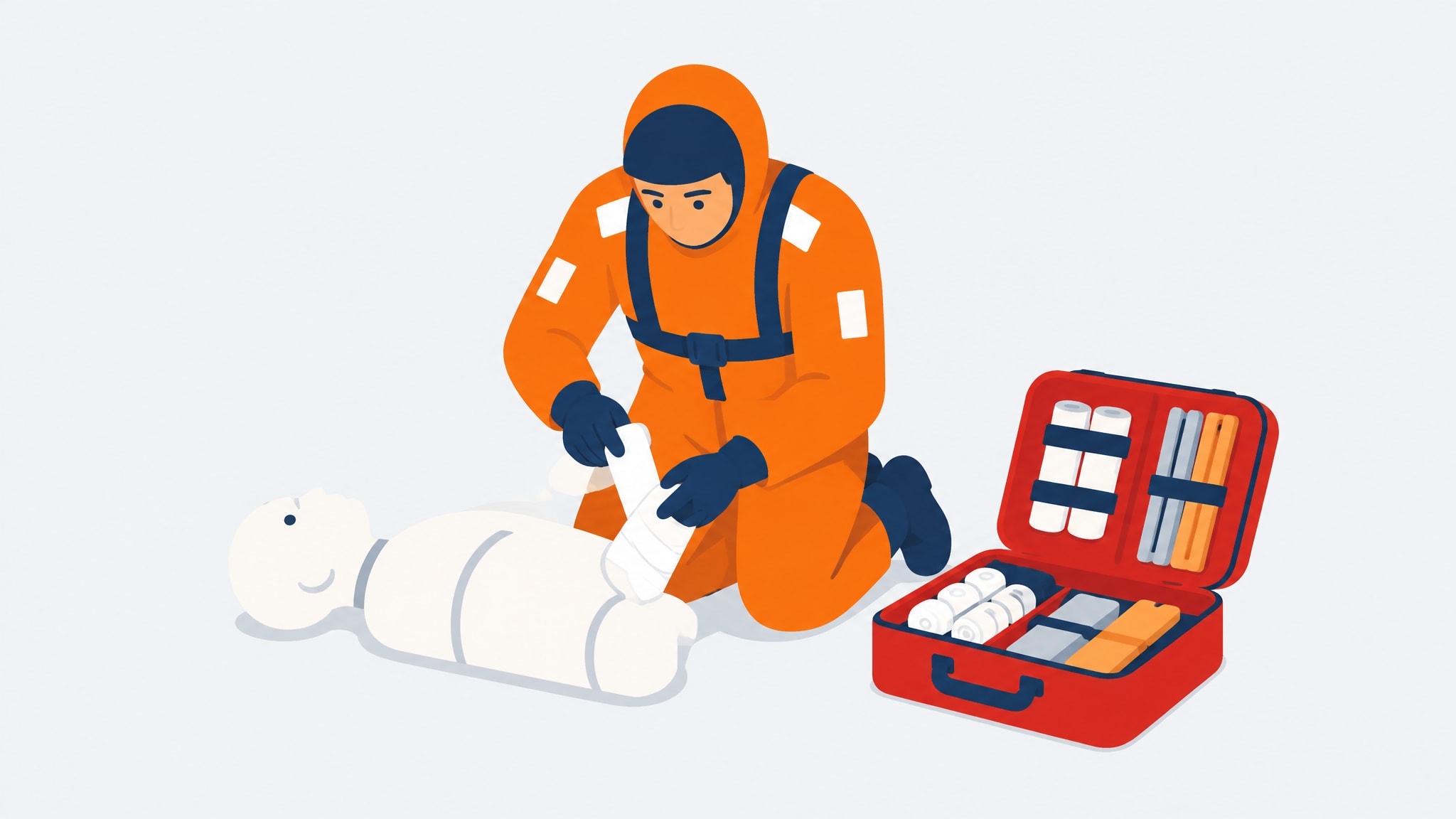
Hands-on practice is the point of the format. Students work on manikins, bandage and splint each other, and run scenarios rather than sit through lectures.
Marine basic first aid cost and what changes the price
Price varies by provider, and no single figure fits every class. The same course can cost noticeably different amounts depending on a handful of factors.
- Course length. A two-day course costs more than a one-day course, and the format should be confirmed.
- CPR-C bundling. A combined course may be priced differently from the marine course alone.
- Class size. Smaller classes mean more instructor time per student.
- Location. Venue and travel affect the price.
- Group booking. A crew or company booking several seats may get a different rate. Details on group rates for crews and companies are available.
For the CPR-C component, CPR course pricing in BC gives the wider context. Marine basic first aid cost should be confirmed directly with the provider, because a figure copied from another site may describe a different course.
What a course quote should include
Two quotes with the same headline price can cover different things. Readers should compare what each quote includes rather than the number at the top.
A useful quote states:
- the issuing body and the certificate that will be issued
- the number of days and the contact hours
- whether CPR-C and AED practice are part of the price
- whether materials, certificate fees and any retake fees are included
- the class size and the location
A low quote that leaves out the certificate fee is not low.
How long marine first aid certification stays valid
Validity is set by the issuing body, not by the training provider. The period should be confirmed with the issuer before booking, and it should be written down alongside the certificate date.
Crews should also not assume the marine certificate follows the same schedule as a WorkSafeBC one. For the provincial picture, see how long first aid certification stays valid in BC.
Renewing before a certificate lapses
A certificate that has lapsed may need the full course again, or a shorter renewal, depending on the provider's rules. Those rules differ, so the question belongs in the booking conversation rather than after expiry.
Renewing before the date passes is the safer route because it keeps the options open. An operator with several crew members should keep a list of expiry dates and book renewals ahead of the season, not during it. A lapsed certificate on a vessel that needs one can mean a boat that cannot sail until the gap is closed.
Booking a marine basic first aid course in Metro Vancouver
Metro Safety Training provides WorkSafeBC-certified First Aid and CPR training in Coquitlam, Vancouver, Burnaby, Richmond and Surrey. Crews and operators can compare nearby locations and pick the one closest to the vessel's home port or the employer's office. Anyone searching for an MBFA course in the Lower Mainland should confirm the marine course details directly, since this page does not list a marine schedule.
Crews that would rather not attend a scheduled class can look at private instructor options in the Lower Mainland.
Marine first aid certification dates in Vancouver and the Lower Mainland
Marine class dates are listed only from the confirmed schedule, and none are printed here because dates change. The current schedule is the one source for dates, locations and seat availability.
Readers can check upcoming Vancouver and Lower Mainland dates, then pick the class that fits the crew's shifts and the vessel's season.
What to confirm before you pay
A few checks before payment prevent most problems. How to choose a first aid training provider in BC covers the general version. For the marine course, the list is short:
- Issuer. Which body issues the certificate, and does it meet the Transport Canada marine standard that applies to the vessel?
- Validity. How long the certificate lasts and what renewal involves.
- Contact hours. The hours as stated by the issuing body.
- Inclusions. Whether CPR-C and AED practice are part of the course.
- Group rates. Whether a discount applies when several crew members book together.
Once the issuer, validity and contact hours are confirmed, the next step is to check the upcoming Lower Mainland class dates and reserve a seat. Employers booking several crew members should ask about group rates at the same time.
Frequently asked questions
Is marine basic first aid the same as WorkSafeBC occupational first aid?
No. Marine basic first aid is built to the Transport Canada marine first aid standard, while WorkSafeBC occupational first aid meets provincial workplace rules. One does not automatically replace the other, so employers with both shoreside and vessel staff should check each requirement separately.
Does every boat crew member need a marine basic first aid certificate?
Not necessarily. Whether a role must hold the certificate depends on the vessel type and the rules that currently apply to it. Operators should confirm the requirement for their own operation with Transport Canada before booking.
How long is a marine basic first aid course?
Marine basic courses typically run two days, with most of the time spent on hands-on practice. CPR-C is often combined with the course. The contact hours should be confirmed with the issuing body before booking.
What happens if a marine first aid certificate lapses?
A lapsed certificate may need the full course again or a shorter renewal, depending on the provider's rules. The issuing body sets the validity period. Renewing before the expiry date keeps more options open.
How much does a marine basic first aid course cost in BC?
Price varies by provider. It depends on course length, whether CPR-C is bundled, class size, location and group booking. Quotes should be compared on what they include, such as certificate fees and AED practice, not just the headline price.
Need Safety Training?
Metro Safety Training runs WorkSafeBC-recognized first aid, CPR and workplace safety courses in Coquitlam, Surrey and Burnaby, and on-site anywhere in Metro Vancouver.
coquitlam
surrey